One of the most dangerous phrases in ecommerce marketing is:
“Our ROAS looks great.”
We hear it all the time.
A brand is reporting a 10x, 12x, or even 15x blended ROAS, so everyone assumes the Google Ads account is performing exceptionally well.
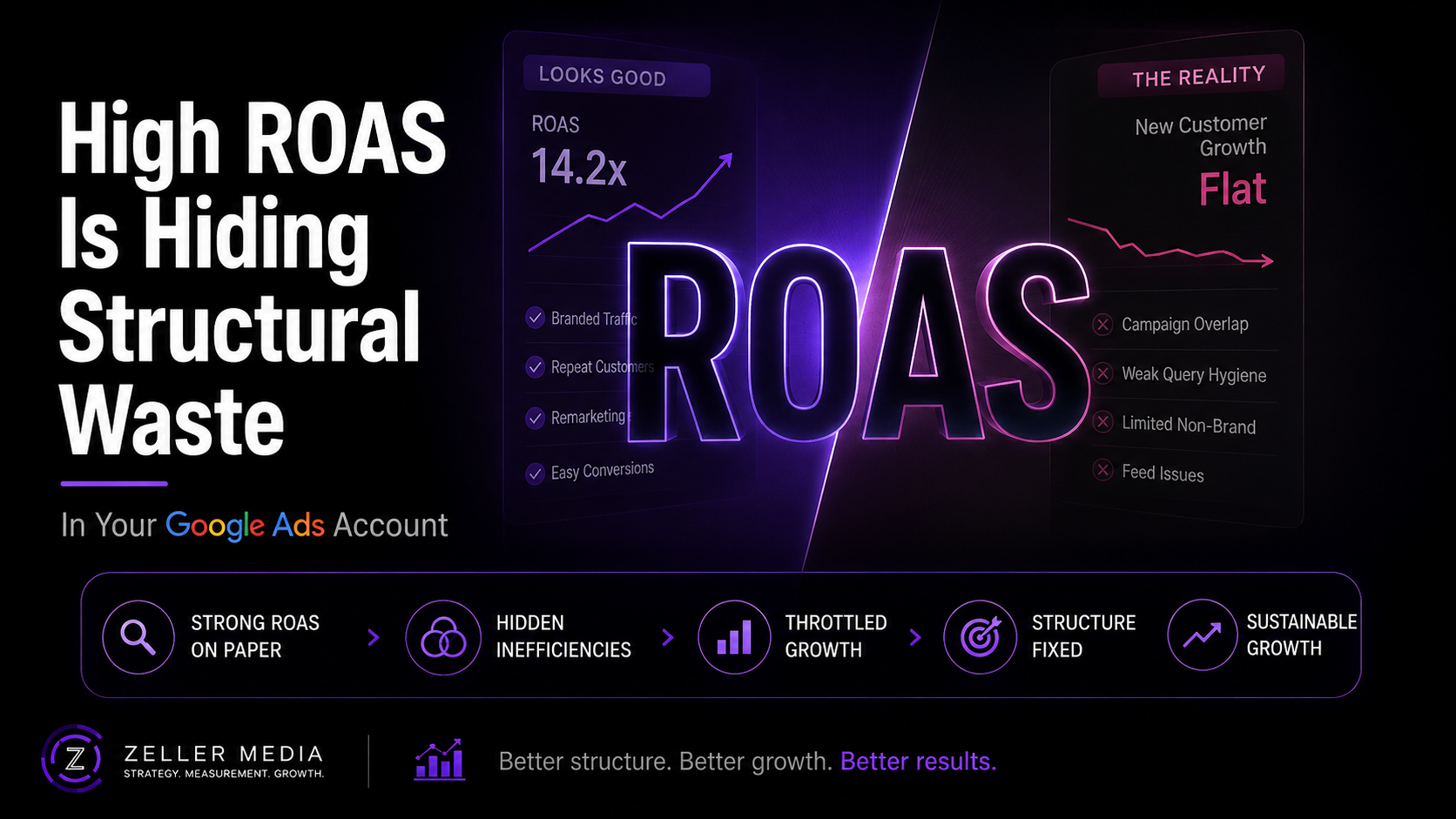
But when we look under the hood, we often find the opposite: campaigns competing against each other, branded traffic inflating performance, weak search query control, and a non-brand acquisition engine that has effectively stopped growing.
A high ROAS is not proof that an account is healthy.
Sometimes it is proof that the account has become too conservative.
Blended ROAS Can Be Misleading
Blended ROAS combines everything: branded searches, repeat customers, remarketing traffic, and true new-customer acquisition.
The problem is that these audiences do not have the same level of difficulty.
Someone searching for your brand name is already familiar with you.
Someone who bought from you last month is much easier to convert than someone discovering your brand for the first time.
The question every ecommerce founder should ask is:
“How much of our ROAS is coming from people who were already going to buy from us?”
The Growth Engine Is Usually Non-Brand Search
In many ecommerce accounts, non-brand campaigns are the real growth engine.
They reach customers who have never heard of the brand.
They introduce the business to new audiences.
They create future repeat buyers.
Yet these campaigns are often the first place where structural problems appear.
Common examples include aggressive Target ROAS settings, limited impression share, and campaigns stuck in an “Eligible (Limited)” state because the bidding strategy is prioritizing efficiency over expansion.
The result is a profitable account that is no longer scaling.
Campaign Overlap Is Wasting Budget
Another issue we frequently see is campaign overlap.
The same search queries can be eligible across multiple campaigns, including Search campaigns and Performance Max.
When that happens, Google receives mixed bidding signals, budgets become fragmented, and reporting becomes harder to interpret.
From the outside, the account may still show a strong overall ROAS.
Internally, however, it is paying unnecessary costs to compete against itself.
Weak Query Hygiene Inflates Performance
Performance Max is powerful, but it requires active management.
Without strong negative keyword controls and query review processes, campaigns can begin matching to low-intent searches.
Branded searches may also leak into non-brand campaigns, artificially improving their reported ROAS.
That creates a dangerous illusion: a campaign appears to be acquiring new customers efficiently when a meaningful portion of its conversions are actually branded.
Founders see a strong number.
The business sees limited incremental growth.
The Product Feed Is Often the Hidden Bottleneck
Weak product titles, incorrect market targeting, raw tags in descriptions, and missing custom labels can significantly reduce visibility and relevance.
Feed quality affects search matching, click-through rate, and shopping performance.
In other words, a mediocre feed can cap growth even when bidding is technically profitable.
What Healthy Ecommerce Accounts Usually Have
The strongest ecommerce accounts tend to share a few characteristics:
- Clear separation between brand and non-brand traffic.
- Minimal query overlap between campaigns.
- Strong negative keyword governance.
- Product feeds segmented by margin, category, or business priority.
- Budget allocation based on customer acquisition goals, not just blended ROAS.
- Measurement tied to profit and customer value rather than platform efficiency alone.
Notice that none of these are flashy tactics.
They are structural decisions.
The Better Question to Ask
Instead of asking:
“Is our ROAS high?”
Ask:
- Is new-customer volume growing?
- Is non-brand revenue increasing?
- Are we gaining impression share in our target categories?
- Is our feed structured around profitability?
- Are we measuring incremental growth, not just attributed revenue?
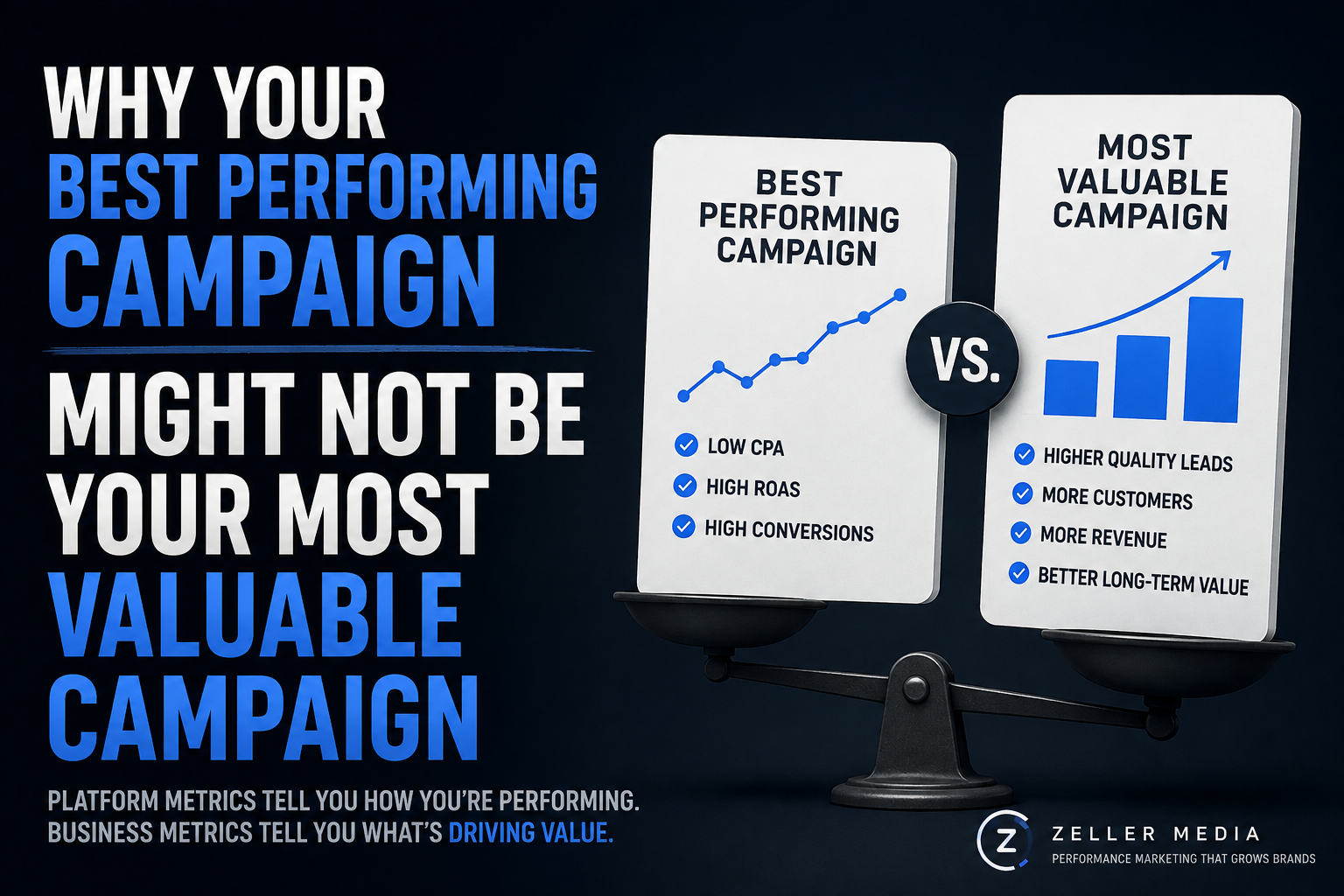
A business can have a lower blended ROAS and still create far more long-term enterprise value if it is acquiring profitable new customers consistently.
Final Thoughts
A strong ROAS is good news, but it is not the full story.
Some of the healthiest-looking Google Ads accounts are actually hiding structural waste, throttled growth, and missed acquisition opportunities.
The goal of ecommerce advertising is not simply to maintain an impressive dashboard number.
It is to build a scalable customer acquisition engine that continues to grow revenue, customer base, and profit over time.
If your account has been reporting excellent ROAS for months while growth has plateaued, that may not be a sign that everything is working.
It may be the signal that it is time to look deeper.