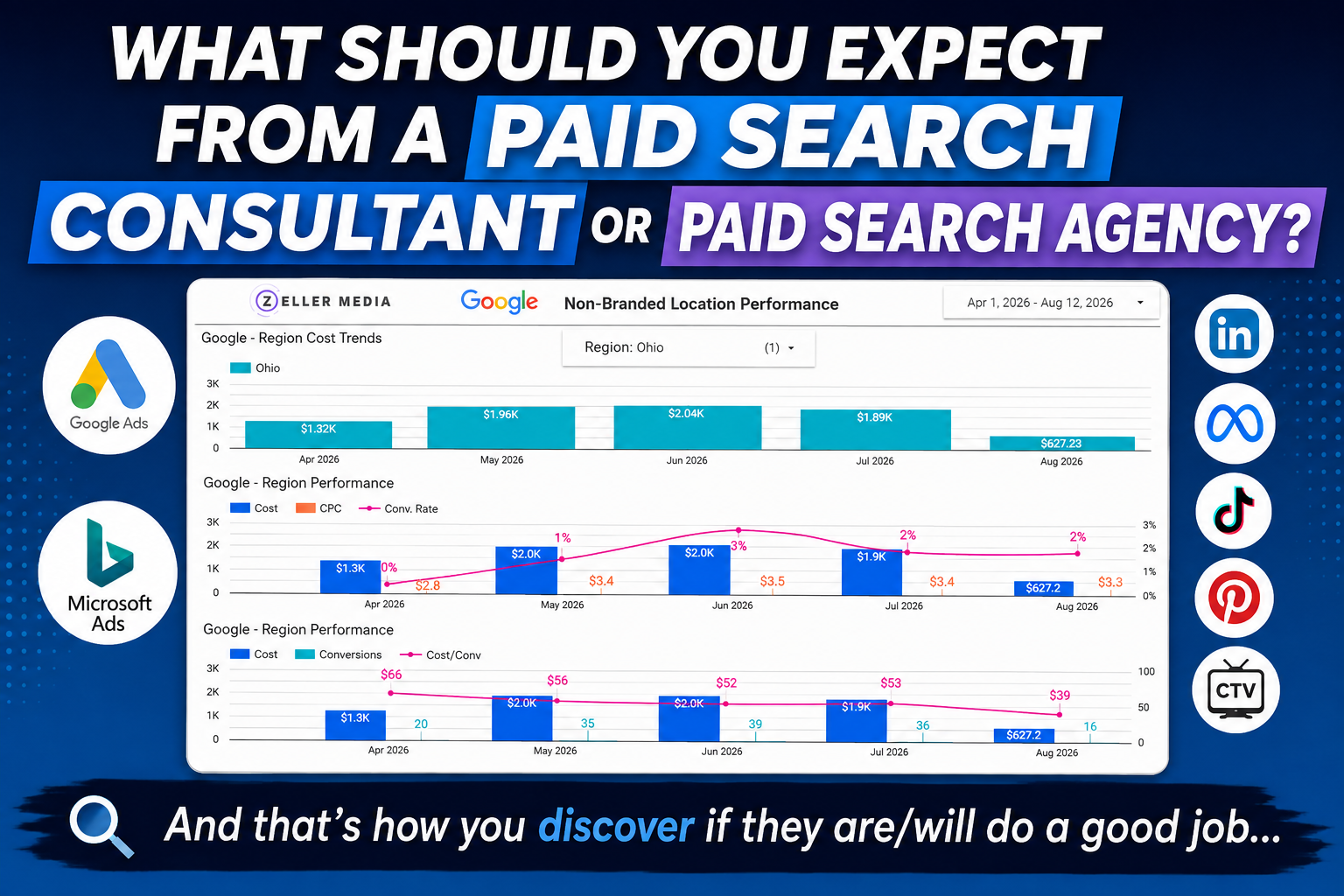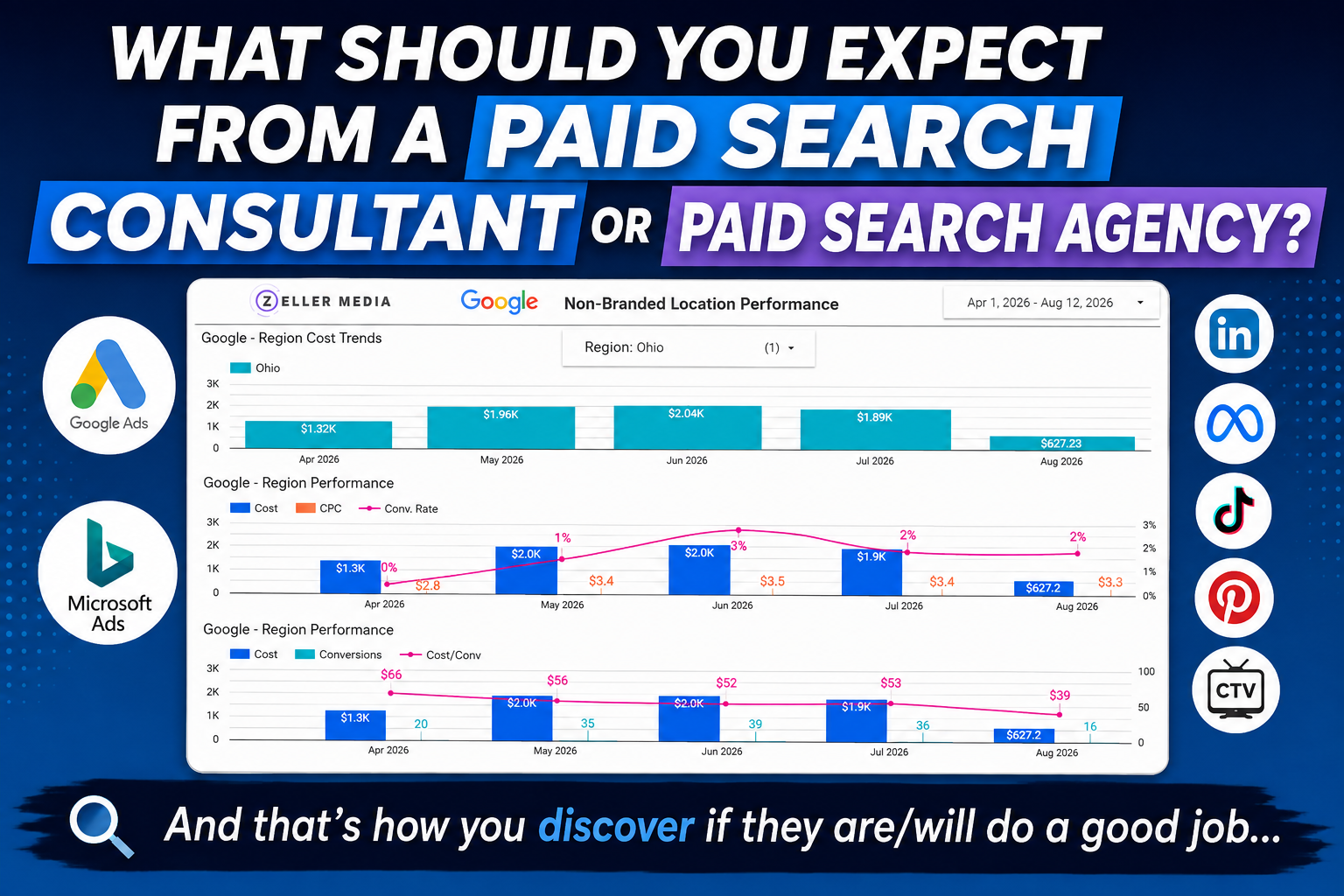
If you searched for paid search consultant or paid search agency, you’re probably trying to answer one of two questions:
- Should I hire one?
- Is my current agency actually doing a good job?
Both are important.
Many businesses pay an agency every month and receive little more than a dashboard screenshot and an invoice. A real paid search consultant should help you understand where growth is coming from, what is limiting scale, which campaigns are driving revenue, and what actions should be taken next.
Campaign management is the minimum.
Strategic guidance and business insight are the real service.
It Starts With Accurate Tracking
Everything begins with measurement.
A professional paid search consultant or agency should ensure that your advertising platforms are connected to a reliable tracking ecosystem, including:
- Google Tag Manager (GTM),
- Google Analytics 4 (GA4),
- enhanced conversions,
- call tracking,
- Microsoft Clarity for user behavior analysis,
- and offline conversion imports from your CRM.
This is one of the biggest differences between agencies that optimize for clicks and agencies that optimize for revenue.
If your agency cannot clearly explain how a lead moves from an ad click into your CRM and back into the advertising platform as a closed customer, that is a major warning sign.
Paid Search Should Be Managed as One Search Ecosystem
For most businesses, Paid Search means managing demand across both Google and Microsoft (Bing) search networks, not treating them as completely separate strategies.
A strong paid search consultant should manage the entire search ecosystem, including:
- branded search campaigns,
- non-branded search campaigns,
- Shopping campaigns,
- Performance Max,
- remarketing,
- audience exclusions,
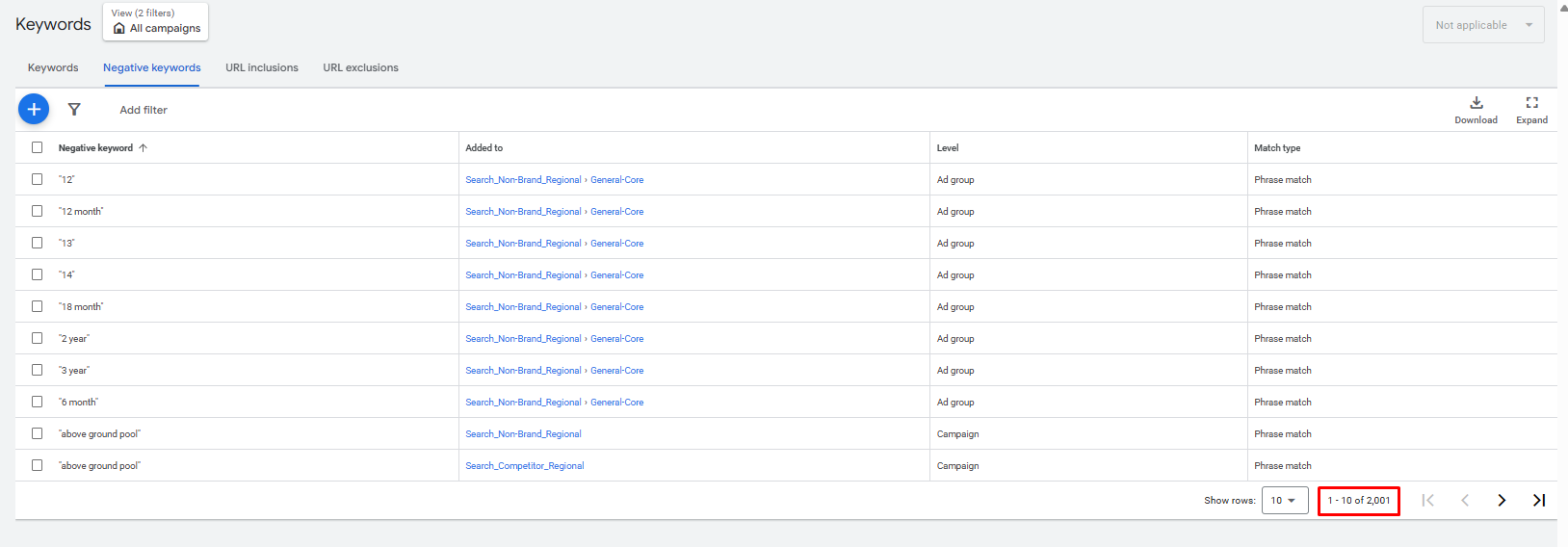
- negative keywords,
- bid strategy adjustments,
- and search query analysis across both engines.
The goal is not to maximize platform metrics. The goal is to maximize profitable demand capture wherever your customers are searching.
Branded Search Is Usually the Bare Minimum
One misconception we see frequently is that every business needs aggressive non-branded paid search campaigns.
That is not always true.
Some businesses already generate strong demand through SEO, referrals, social media, email marketing, television, or word of mouth. In those cases, non-branded paid search may be scaled gradually or tested selectively.
Branded search is different.
If a business has meaningful brand awareness and a relevant marketing budget, it should almost always have branded search campaigns running.
Branded campaigns help:
- protect your brand from competitors bidding on your name,
- control the messaging that appears when people search for you,
- improve click-through rates,
- direct users to the most relevant landing pages,
- and capture high-intent traffic that is already looking specifically for your business.
When we audit accounts, one of the first things we check is whether branded search is properly protected.
If a business is spending significantly on marketing but has no branded search campaign in Google or Microsoft Ads, that is usually a sign that something is missing from the strategy, and your competitors are most likely stealing potential customers who are searching for your business.
Daily Budget Pacing Is a Core Paid Search Responsibility
Another area that separates strategic agencies from basic account managers is budget pacing.
A paid search consultant should monitor search spend daily to ensure campaigns are neither overspending nor underspending throughout the month.
Poor pacing can lead to:
- lost impression share during peak demand periods,
- unstable bidding performance,
- learning phase resets,
- and missed revenue opportunities.
Good pacing is not just a finance task. It is a growth management task.
A well-managed paid search account spends intentionally, maintains auction visibility during high-value periods, and supports predictable business growth rather than simply exhausting budget as quickly as possible.
Paid Search Is Often Part of a Larger Paid Media Strategy
A modern paid search agency should also understand when search alone is not enough.
Depending on the client’s goals, we may manage or coordinate:
- Meta Ads for demand creation and remarketing,
- TikTok Ads for discovery and creative-led acquisition,
- Pinterest Ads for high-intent visual shopping behavior,
- LinkedIn Ads for B2B lead generation,
- and Connected TV (CTV) campaigns for awareness and branded search lift.
The right channel mix depends on the business model.
A local service business has different needs than an ecommerce brand, a SaaS company, or a Medicare insurance agency.
The consultant’s job is to recommend the channels that support the business objective, not to force every client into the same platform.
Search Query Analysis Should Happen Regularly
Search behavior changes constantly.
Businesses should expect bi-weekly search query reporting that identifies:
- wasted spend,
- irrelevant searches,
- emerging customer intent,
- competitor terms,
- and new keyword opportunities.
This is one of the highest-leverage activities in paid search, yet many agencies do it inconsistently.
Ad Copy Should Be Tested Every Month
Your ads are competing against every other advertiser in the auction.
A paid search consultant or agency should be launching monthly ad copy optimizations, including new:
- headlines,
- descriptions,
- offers,
- calls to action,
- and messaging angles.
If the same ads have been running for months without meaningful testing, the account is probably being maintained rather than improved.
Competitive Intelligence Should Be Ongoing
Advertising performance is relative.
You should expect regular monitoring of competitor activity across search, social, and other relevant platforms.
We conduct monthly competitor creative analysis to understand:
- what competitors are promoting,
- which hooks they are using,
- which formats they are testing,
- and how the market is evolving.
That intelligence informs future campaign strategy and helps clients stay ahead of changing consumer expectations.
Creative Strategy Is Part of Performance Marketing
Even in paid search, creative matters.
Landing pages, display assets, video ads, Performance Max creatives, and remarketing assets all influence conversion rates.
Clients should expect:
- monthly creative insights,
- bi-weekly to monthly creative briefs,
- and data-driven recommendations for new concepts, hooks, and formats.
Good consultants do not wait for performance to decline before generating new testing ideas.
Reporting Should Explain the Business, Not Just the Ads
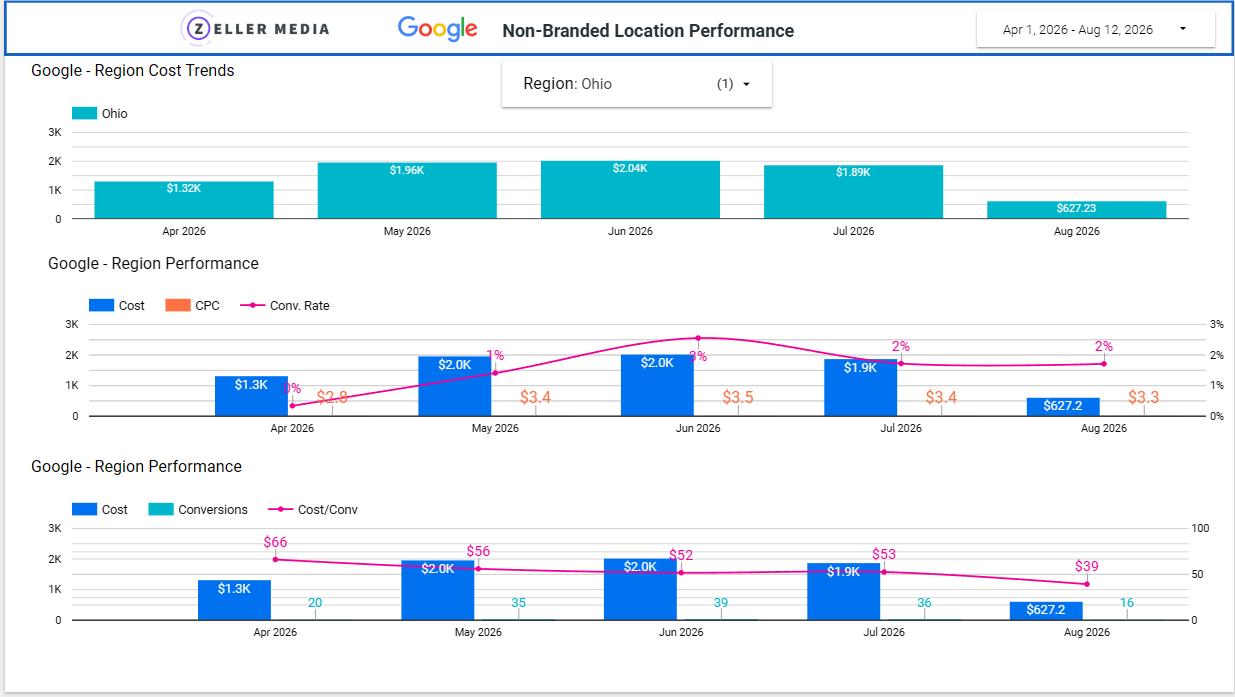
This is where many agencies fail.
A monthly report should not be a spreadsheet dump or a screenshot of Google Ads.
It should explain:
- what happened,
- why it happened,
- what changed,
- how fast the business is growing,
- and what actions should be taken next.
We use Google Data Studio (Looker Studio) extensively because it allows us to build custom executive dashboards rather than relying on generic platform reports.
Advanced reporting can include:
- month-over-month growth trends,
- year-over-year comparisons,
- lead velocity trends,
- ROAS by campaign,
- branded vs. non-branded growth,
- qualified lead trends,
- revenue pacing,
- offline conversion trends.
- and media efficiency over time.
The goal is not to show more charts.
The goal is to understand the pace at which both the media and the business are growing.
For example, a business may see spend increase by 20% while qualified leads increase by 35% and revenue increase by 50%. A standard ad platform report rarely tells that story clearly. A custom Looker Studio dashboard can.
Good reporting helps business owners answer strategic questions such as:
- Are we accelerating or slowing down?
- Is growth becoming more efficient?
- Which campaigns are driving the next stage of scale?
- What should we expect next quarter?
That is the level of reporting a serious paid search agency should provide.
Communication Is Part of the Service
One of the clearest signs of a strong paid search agency is accessibility.
Clients should expect:
- at least weekly meetings or strategy check-ins,
- proactive communication when performance changes,
- and the ability to reach the team whenever questions arise.
In our model, clients can contact us through the communication channel that is most convenient for them, and Bradley responds directly and quickly. Fast communication prevents small issues from becoming expensive problems.
What Good Paid Search Agencies Do Behind the Scenes
Much of the value is invisible to the client.
Strong consultants spend significant time:
- reviewing search terms,
- monitoring auctions,
- analyzing attribution,
- validating tracking,
- reviewing call recordings,
- comparing channel performance,
- improving feeds,
- auditing landing pages,
- and forecasting growth scenarios.
The monthly report is the output.
The analysis is the service.
Five Questions to Ask Your Current Paid Search Agency
Ask them:
- How are offline conversions imported into the ad platforms?
- When was our last search query report delivered?
- What ad copy tests were launched this month?
- What competitor analysis was completed recently?
- How are you measuring business impact beyond clicks and leads?
If the answers are vague or unavailable, you may not be receiving the strategic management you believe you’re paying for.
When It’s Worth Getting a Second Opinion
Consider an independent audit if:
- performance has plateaued,
- lead quality has declined,
- budget pacing is inconsistent,
- reporting lacks actionable insight,
- ad copy rarely changes,
- competitor activity is never discussed,
- or tracking has never been independently verified.
A fresh review often uncovers structural issues that have been hidden for months or years.
Why Businesses Choose Zeller Media
If you’ve read this far, you can probably tell we have a strong opinion about what a paid search consultant and paid search agency should be.
That opinion comes from experience.
Bradley has spent more than 15 years managing paid search and paid social campaigns, including $100M+ in annual advertising budgets across ecommerce, healthcare, Medicare, finance, legal, hospitality, B2B, SaaS, and consumer brands. Before founding Zeller Media, he built and managed large-scale programs for major agencies and national advertisers, and he now applies that same performance discipline to mid-market businesses that need senior-level attention without enterprise bureaucracy.
Since launch, Zeller Media has worked with 35+ brands across DTC, B2B, and ecommerce, and our philosophy is simple: no layers, no junior handoffs, no bloated agency process. Clients work directly with the senior strategist managing the account.
That approach is reflected in our public reputation. Zeller Media currently holds 12 verified five-star reviews on Clutch, with clients consistently highlighting responsiveness, hands-on management, lead quality, and measurable business growth.
You can view the reviews here: Clutch Testimonials
Contact us and ask for an audit now: Contact Us