Many business owners assume that if they increase their Google Ads budget, more customers will follow.
Unfortunately, that's rarely how it works.
Google Ads can be one of the most effective ways to generate qualified leads, but only when the entire system behind the campaign is working together.
We've seen businesses spend thousands of dollars every month while unknowingly limiting their own results through poor campaign structure, weak messaging, and incomplete tracking.
If your campaigns generate clicks but not consistent customer growth, one of these issues may be the reason.
Not Every Conversion Is a New Customer
One of the biggest mistakes businesses make is assuming every conversion represents new business.
Imagine someone who already knows your company.
They search your business name on Google, click your ad, and become a lead.
Did Google Ads generate a new customer?
Probably not.
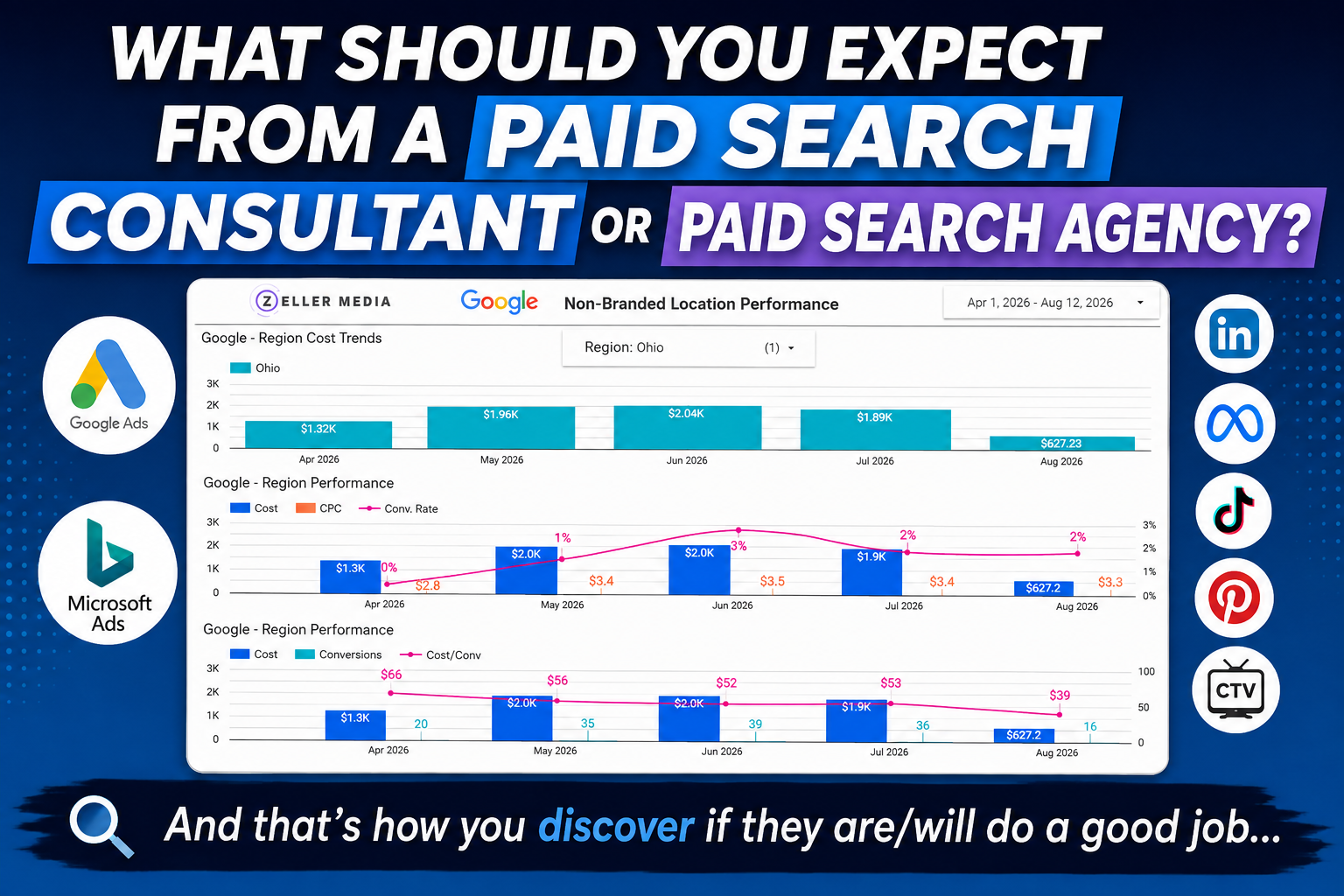
This is why separating brand campaigns from non brand campaigns is so important.
Brand campaigns capture people already searching specifically for your business.
Non brand campaigns introduce your business to people who may have never heard of you before.
Without separating the two, it's difficult to understand whether your advertising is creating new demand or simply paying for customers who were already planning to contact you.
For business owners, that distinction matters.
Because if you don't know where your new customers are actually coming from, it's almost impossible to make confident marketing decisions.
Your Ads Create Your First Impression
Many businesses spend hours improving their website while giving very little attention to the advertisements that send people there.
But your advertisement is often the very first interaction a potential customer has with your business.
Before someone visits your website...
Before they read your reviews...
Before they contact your team...
They read your ad.
Strong ad copy does much more than generate clicks.
It communicates professionalism, establishes credibility, and gives customers a reason to believe your business understands their problem.
Weak messaging, on the other hand, can cause qualified prospects to scroll past your business, even if your service is exactly what they're looking for.
You're Probably Reaching the Wrong Searches
Google Search campaigns don't target people.
They target search intent.
That means your keywords determine the types of customers entering your sales funnel.
If your campaign is matching searches that aren't relevant to your business, your advertising budget is being spent attracting people who were never likely to become customers.
This is why reviewing Search Query Reports on a regular basis is one of the most valuable habits in Google Ads management.
They reveal the actual searches people typed before clicking your advertisement.
These insights help identify wasted spend, discover new opportunities, and continuously improve the quality of incoming leads.
Many campaigns don't struggle because Google Ads doesn't work.
They struggle because the campaign is attracting the wrong audience.
Clicks Don't Pay the Bills. Customers Do.
Many businesses measure success by looking at clicks, impressions, or lead volume.
Those numbers are useful.
But they don't answer the most important question:
Which leads actually become customers?
Without accurate tracking, your marketing decisions are based on assumptions.
Every business should have a process for following leads from the moment they click an advertisement until they become a paying customer.
Whether that's through a CRM, offline conversion tracking, or another reporting system, connecting marketing data with real revenue provides a much clearer picture of campaign performance.
Even more importantly, feeding qualified sales data back into Google allows its machine learning systems to optimize toward the types of customers most likely to generate revenue, not simply submit a contact form.
Over time, that can significantly improve lead quality while making advertising spend more efficient.
Key Takeaways
- Separate brand and non brand campaigns to understand where new customers are coming from.
- Treat ad copy as your business's first impression, not just a collection of headlines.
- Review search queries regularly to ensure you're attracting qualified prospects.
- Measure success using real customers, not just clicks or leads.
- Connect your CRM and conversion data to Google whenever possible to improve campaign optimization.
Final Thoughts
Google Ads isn't just about generating traffic.
It's about generating the right customers.
Businesses that consistently outperform their competitors don't simply spend more on advertising.
They understand where new customers come from, continuously improve their messaging, monitor search intent, and measure success all the way through the sales process.
When every part of that system works together, Google Ads becomes much more than an advertising platform. It becomes a predictable driver of business growth.