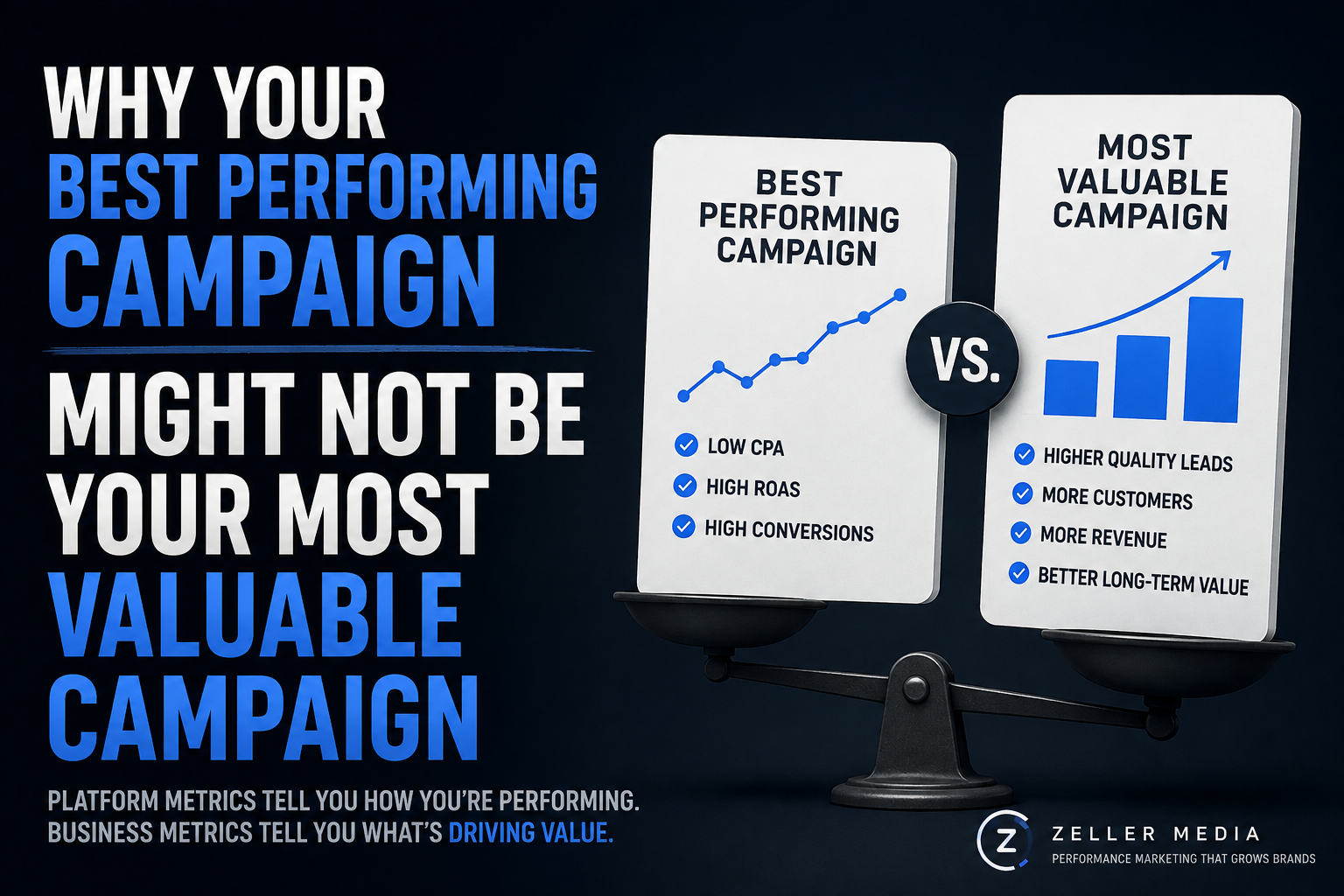
How We Turn Phone Calls Into Measurable ROI With CallRail
Every marketing platform can tell you how many clicks your ads received.
Most can tell you how many leads were generated.
Very few can tell you which campaigns actually produced customers.
That's the difference between measuring marketing activity and measuring business growth.
For businesses where phone calls are one of the primary ways customers get in touch, stopping at form fills or click-through rates leaves a significant part of the customer journey unmeasured.
The Problem
Many agencies optimize campaigns around front-end metrics such as:
- Clicks
- Cost per Click (CPC)
- Click-Through Rate (CTR)
- Form submissions
Those numbers help measure campaign performance.
But they don't answer the question every business owner really wants answered:
Which marketing campaigns are generating revenue?
A lead isn't revenue.
A phone call isn't revenue.
Even a scheduled appointment isn't revenue.
Without connecting marketing to actual sales, it's easy to optimize campaigns that look great on paper but contribute very little to the bottom line.
The Missing Piece
That's where CallRail changes the conversation.
Instead of simply reporting that someone called your business, CallRail helps connect those conversations back to the marketing efforts that generated them.
Combined with Google Ads, Google Analytics 4, and CRM reporting, businesses can understand:
- Which campaigns generate qualified phone calls.
- Which keywords produce the highest-quality conversations.
- Which traffic sources consistently generate customers.
- Which marketing investments create long-term business value.
For many service-based businesses, phone calls are the highest-intent lead source.
Someone willing to pick up the phone is often much closer to making a buying decision than someone casually submitting a form.
Understanding where those calls originate allows marketing budgets to be optimized around revenue, not just lead volume.
Connecting Marketing to Revenue
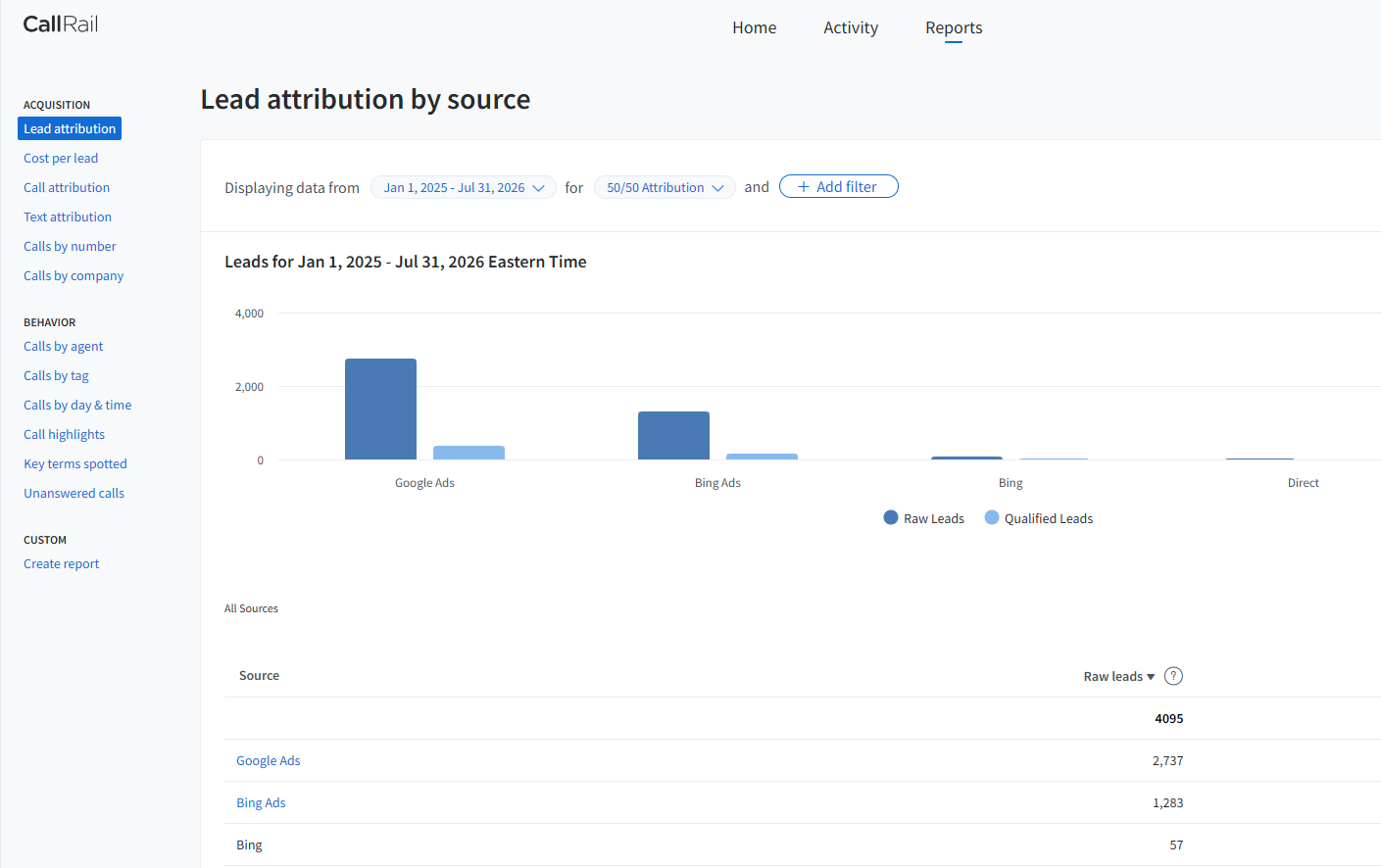
Once phone calls are connected to CRM outcomes, marketing stops being measured by platform metrics alone.
It starts being measured by business results.
For a business we've partnered with in the Medicare insurance industry, combining advertising data with CallRail and downstream sales reporting completely changed how performance is evaluated.
Between January 1, 2025, and July 31, 2026, the marketing program produced:
- 4,095 qualified leads
- 38% close rate
- 1,556 new customers
- $6,224,000 in total revenue (Average $4000 annual LTV)
- $306,000 in advertising investment
That represents an overall ROAS of approximately 20.3x.
More importantly, those numbers weren't estimated using platform-reported conversions alone.
They were validated by following the customer journey beyond the initial click, through qualified phone calls, into the CRM, and ultimately to closed business.
Without that level of attribution, many of the campaigns responsible for generating those customers would have appeared far less valuable than they actually were.
Better Attribution Creates Better Decisions
Once marketing is connected to qualified phone calls and actual sales, optimization becomes much more strategic.
Instead of asking:
"Which campaign generated the cheapest lead?"
Businesses can ask:
- Which campaigns generate the highest-quality conversations?
- Which keywords consistently produce customers instead of inquiries?
- Which traffic sources deserve additional investment?
- Which campaigns drive the highest long-term return?
Those are business questions, not platform questions.
And they're the questions that lead to better allocation of marketing budgets.
Final Thoughts
Marketing should never end at the click.
The real goal isn't generating more traffic or even more leads.
It's generating more customers.
By combining Google Ads, CallRail, Google Analytics 4, and CRM reporting, businesses gain a complete view of the customer journey, from the first interaction to closed revenue.
When every phone call can be connected back to the campaign that generated it, marketing decisions become clearer, optimization becomes smarter, and every advertising dollar becomes easier to justify.
Because the best marketing strategies aren't built on vanity metrics.
They're built on measurable business outcomes.