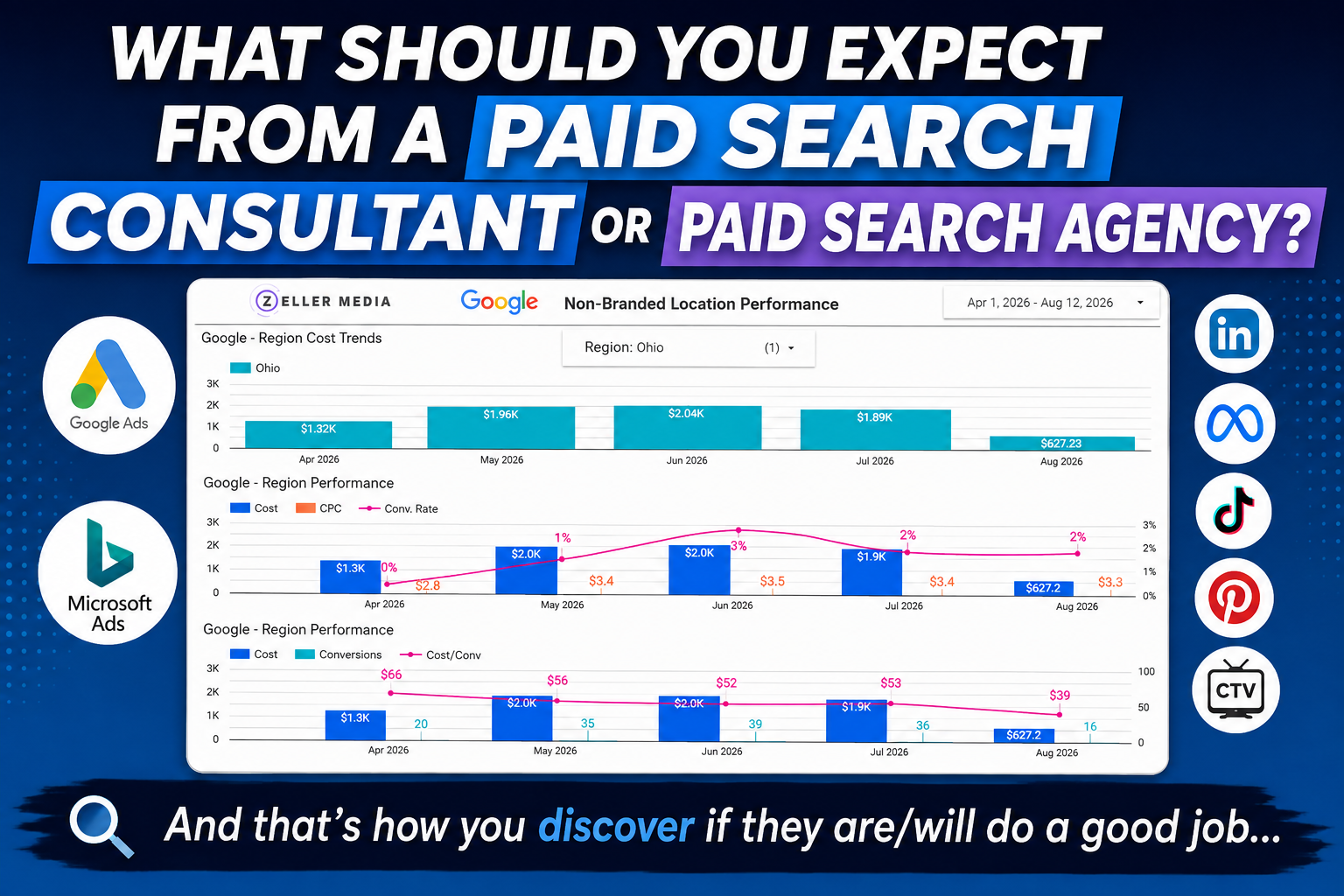
The first month with a Google Ads specialist should give you a clearer account, a prioritized plan, and a reason for the changes being made.
It should also establish what you can trust. If the account counts the wrong actions as conversions or nobody knows which leads become customers, more campaign activity will not answer the business question.
I'm Bradley Zeller. My starting point is understanding where the money goes, what comes back, and what prevents us from making a better decision. Here is how I think about the first 30 days of paid search management.
The timing below is a working sequence. Access delays, the sales cycle, data volume, and the condition of the account can change it. Urgent problems get attention as soon as they are found.
Days 1–5: Agree on what the business needs
Before changing the account, I want to know what a good customer is worth, which offers matter most, and what your team can actually deliver.
For a lead generation business, that means discussing qualification, close rates, sales follow-up, service areas, and capacity. For ecommerce, it means understanding product margins, repeat purchases, returns, and inventory constraints.
We also need a working definition of success. “Lower cost per lead” is not enough if the cheaper leads are a worse fit. “Higher return on ad spend” needs context if the account is mostly reaching existing customers.
What should be documented
- The business outcome campaigns are meant to support.
- The budget and any limits on changes to it.
- The products, services, or locations that deserve priority.
- Who provides sales or customer quality feedback.
- Who approves changes to offers, pages, and creative.
This is also the time to confirm access to the ad account, analytics, tag management, relevant CRM reporting, and Merchant Center when applicable. Missing access should appear as a named dependency with an owner.
Days 1–10: Check the measurement from click to outcome
I want to see what happens when someone takes the action the campaign is supposed to generate.
Does the form submit successfully on mobile? Does the inquiry reach the right person? Is the event counted once? Is the source information retained where it needs to be? For a purchase, do the recorded order value and currency make sense?
Then I review the conversion actions and the goals each campaign uses. Google's primary and secondary conversion settings affect reporting and bidding. Checking the event is only part of the job; we also need to check how the campaign uses it.
For businesses with offline sales, I want a workable path from inquiry to qualified lead or closed business. If that connection is missing, the plan should explain the gap and the steps needed to close it.
What you should receive: A measurement inventory showing what is reliable, what is broken or unverified, who owns each fix, and which decisions need to wait.
Days 6–15: Find where the money is going
The account review should connect spend with intent and business value. It should do more than list settings that look different from someone's preferred setup.
I review the available search term data, targeting, exclusions, ads, budgets, conversion goals, and campaign history. I also look for changes that may explain performance shifts before recommending another change.
Separate the jobs inside the account
Brand Search reaches people using your name. Non-brand Search competes for demand around the problem, product, or service. Competitor Search needs its own commercial justification. Their results deserve separate context.
Campaign types need the same discipline. Search, Shopping, Performance Max, and Demand Gen should each have a defined role, suitable inputs, and a way to evaluate their contribution. A new account does not automatically need all four.
For ecommerce, the review also needs to consider the product feed, product eligibility, and which items deserve budget. For lead generation, the relationship between search intent and the actual offer needs close attention.
What you should receive: A short list of findings with supporting evidence, the likely business impact, and a recommended action. A long export without priorities is unfinished work.
Days 10–20: Review the page after the click
A relevant ad can still lead to a poor experience. I review whether the landing page continues the promise made in the ad and makes the next step obvious.
That includes the mobile layout, loading experience, offer clarity, proof, form requirements, and confirmation after submission. For a sales-led business, it also includes what happens after the lead arrives.
Consider a hypothetical example: someone searches for an emergency service, clicks an ad promising immediate help, and lands on a general services page with no clear way to call. The campaign and the page are asking the customer to do different things.
What you should receive: Specific recommendations tied to the customer journey, with an owner for copy, design, development, or sales follow-up. The scope should make clear which fixes I handle and which require your team.
Days 15–25: Make focused changes and document why
Some problems justify an immediate fix: a broken destination, invalid conversion data, or clearly irrelevant spend. Other changes need a deliberate test.
I prioritize work by likely impact, confidence in the diagnosis, and effort. That helps keep the first month from becoming a rebuild simply for the sake of a rebuild.
A useful change log explains the issue, the action, the expected effect, and how it will be evaluated. If we change a landing page and campaign structure at the same time, we need to acknowledge that isolating the effect of either change becomes harder.
For each meaningful test, agree on:
- The question we are trying to answer.
- The change being made.
- The outcome that matters.
- The budget or other limits.
- The evidence needed before making the next decision.
What you should receive: A record of completed fixes and active tests, including anything blocked by missing information or approvals.
Days 25–30: Review what we know and decide what comes next
The month-one review should explain what changed, what the early data suggests, and what still needs time.
Recent results can be incomplete. Google documents how conversion delay can make recent acquisition costs look higher or return on ad spend look lower before later conversions are reported. A long sales cycle creates another reason to separate early signals from completed business outcomes.
Thirty days is a reasonable time to expect a documented diagnosis and visible progress on agreed work. It is not a universal deadline for proving profitable scale.
Your month-one handoff should include
- A baseline, with any measurement limitations clearly stated.
- The main findings and why they matter.
- The fixes completed and changes made.
- The tests running and how they will be judged.
- The next priorities, owners, and dependencies.
You should be able to follow the logic from business objective to account decision without needing to become a Google Ads specialist yourself.
What I would want you to ask me after 30 days
“What do we understand now that we did not understand when we started—and what are we doing with that information?”
That question keeps the work grounded. It makes room for honest uncertainty while still expecting action and accountability.
If you are still choosing a partner, start with these questions to ask before hiring a Google Ads specialist. If you want to discuss your own account, talk with Bradley.