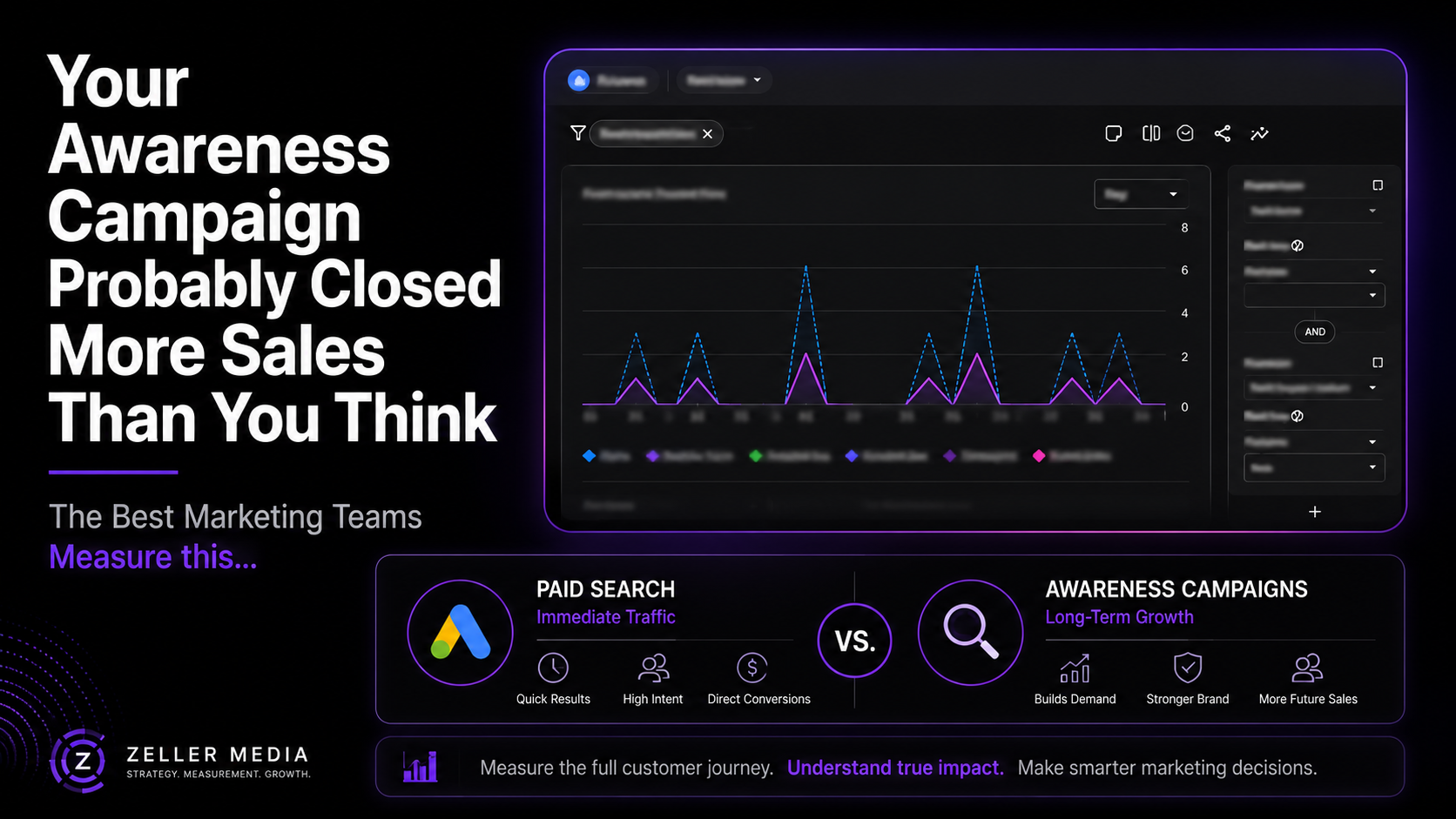
Your Awareness Campaign Probably Closed More Sales Than You Think
Imagine someone watches your TV commercial while eating dinner.
They don't click anything.
The next morning, they search your company on Google.
They browse your website.
Leave.
A few days later they come back through a branded search ad and finally make a purchase.
Which campaign generated the sale?
If you only look inside Google Ads, you'll probably say Google Search.
If you only look inside your TV advertising platform, you'll probably say television didn't work.
In reality, both channels contributed.
The awareness campaign introduced your business.
Search simply captured the demand later.
That's how most buying journeys work today.
Marketing Channels Don't Work in Isolation
One of the biggest mistakes businesses make is expecting every advertising platform to generate direct conversions.
Search campaigns are designed to capture existing demand.
Awareness campaigns have a different job.
They put your brand in front of people before they're actively looking for your product or service.
That familiarity changes future buying decisions.
Someone who has already seen your brand is far more likely to recognize it, trust it, and click on it when they eventually start searching.
The problem is that awareness rarely receives credit for creating that opportunity.
The Last Click Rarely Tells the Whole Story
Most advertising platforms naturally report the conversions they can directly attribute.
There's nothing wrong with that.
The problem begins when businesses use those reports as their only source of truth.
Customers don't buy after one interaction anymore.
They discover brands.
Research competitors.
Read reviews.
Visit websites multiple times.
Search again.
Return later.
Eventually they purchase.
Looking only at the final click ignores everything that happened beforehand.
Use GA4 to Measure the Entire Customer Journey
Fortunately, measuring awareness campaigns has become much easier.
If your website has Google Analytics 4 (GA4) properly installed and your key business events are configured, you can start understanding how different marketing channels contribute to real business outcomes.

Navigate to:
Reports → Engagement → Events
Then add two simple filters.
- First, filter by Event name, using Contains, and enter your primary business event, such as purchase, generate_lead, schedule_tour, or whatever represents success for your business.
- Next, add another filter using Session source / medium. Here, enter the marketing channel you want to analyze, whether that's mntn or another traffic source or campaign.
Instead of asking:
"How many conversions did this advertising platform report?"
You're asking something much more valuable:
"How many important business events originated from this marketing channel?"
That small change completely changes how you evaluate awareness marketing.
Awareness Is Meant to Create Future Demand
Awareness campaigns are rarely optimized for immediate purchases.
Their job is to increase recognition.
Build familiarity.
Stay top of mind.
That influence often appears days or even weeks later when customers search for your business directly, revisit your website, or convert through another channel.
When businesses expect awareness campaigns to behave exactly like Search campaigns, they're evaluating two completely different marketing objectives using the same benchmark.
The Best Marketing Teams Measure the Ecosystem
The most successful companies don't ask,
"Which platform got the conversion?"
They ask,
"Which platforms helped create the conversion?"
Every marketing channel has a different responsibility.
Search captures demand.
Remarketing reinforces trust.
Email nurtures existing prospects.
Awareness introduces your business to people who may become customers tomorrow.
The businesses growing the fastest understand that these channels aren't competing against each other.
They're working together.
Final Thoughts
Your awareness campaigns may be contributing far more to your revenue than your advertising dashboard suggests.
If you're evaluating marketing using only last-click conversions, you're only seeing one piece of the customer journey.
By combining platform data with Google Analytics 4 and measuring business events across your marketing channels, you gain a much clearer understanding of how customers actually discover, research, and choose your business.
Because in modern marketing, the campaign that gets the credit isn't always the campaign that created the customer.