High ROAS Doesn't Always Mean Your Ecommerce Ads Are Working
Every ecommerce business wants a higher ROAS.
It makes sense.
The higher the return on your advertising spend, the more successful your campaigns appear.
A campaign generating a 12x ROAS sounds far better than one generating a 4x ROAS.
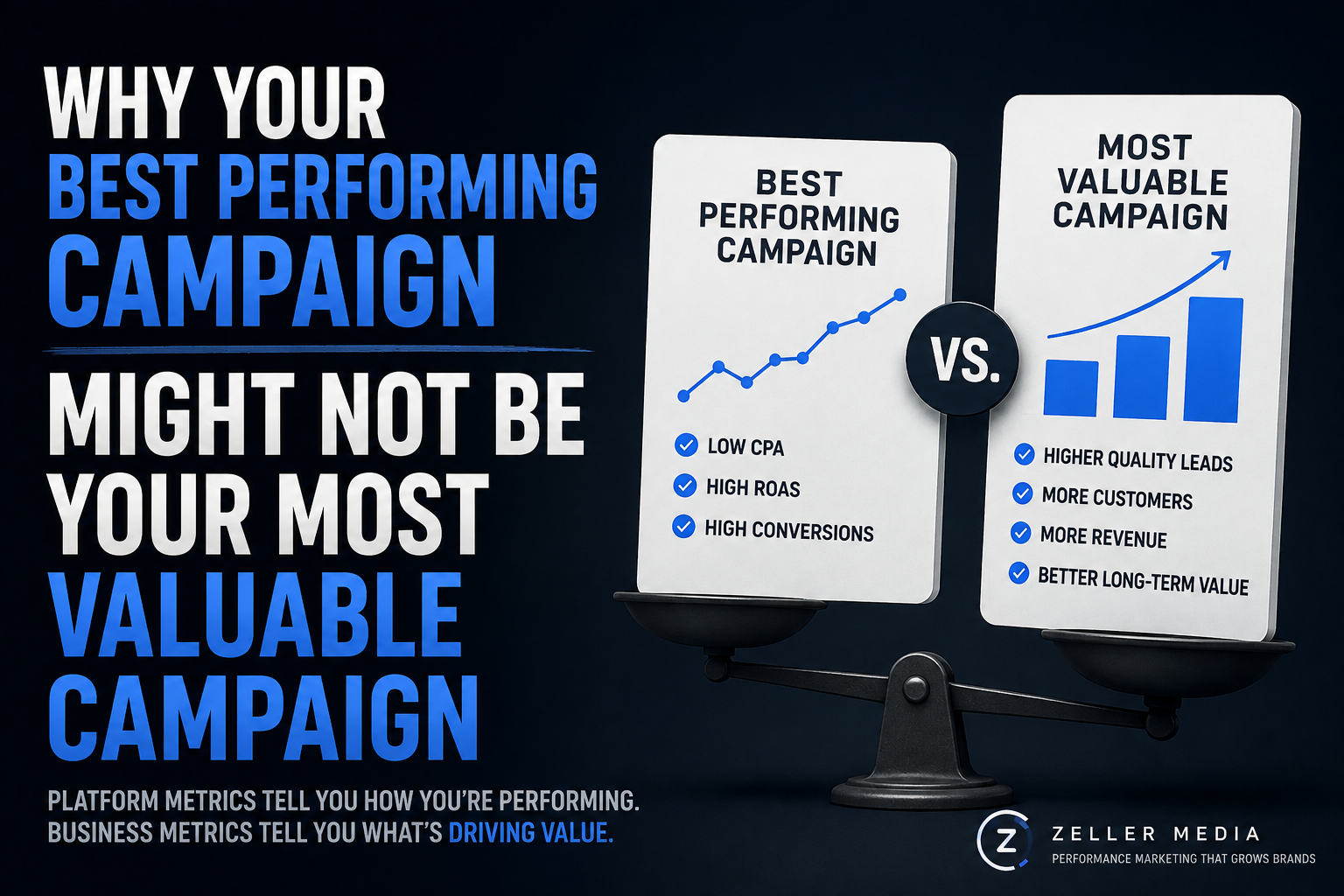
But what if the 12x campaign isn't actually growing your business?
This is one of the biggest misconceptions we see in ecommerce advertising.
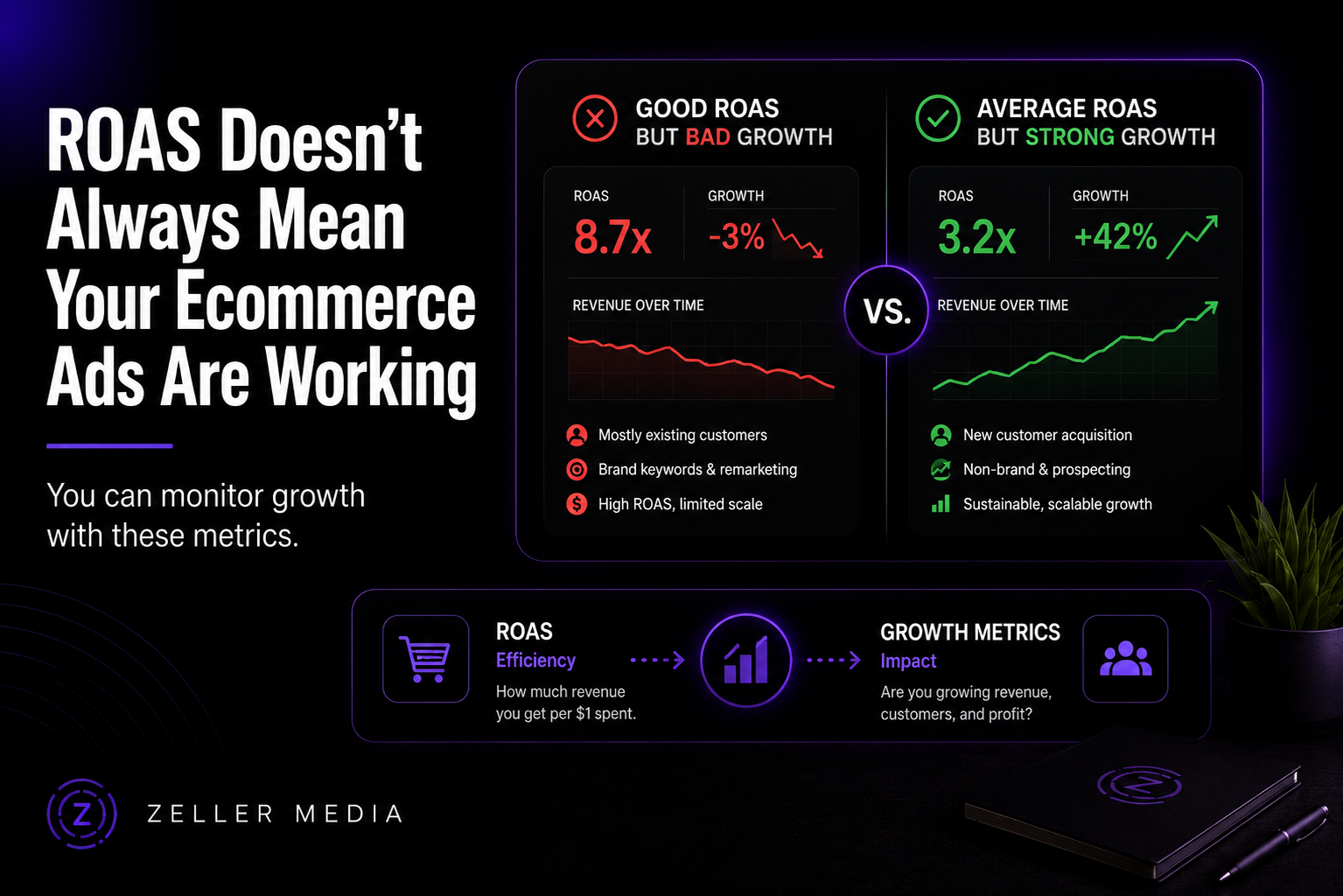
A high ROAS often measures efficiency.
It doesn't always measure growth.
ROAS Doesn't Tell You Where Your Customers Came From
Imagine someone has been searching for your brand all week:
- They've visited your website.
- Read product reviews.
- Compared competitors.
- Subscribed to your email list.
Finally, they search your brand name on Google and click your advertisement.
Google Ads receives credit for the sale.
Your ROAS looks incredible.
But would that customer have purchased anyway?
Possibly.
ROAS tells you how efficiently a campaign generated attributed revenue.
It doesn't tell you whether that campaign created new demand or simply captured existing demand.
That distinction matters.
Brand Campaigns Usually Produce the Highest ROAS
One of the highest-performing campaign types for many ecommerce businesses is branded search.
These campaigns target people already searching for your company or products.
That's exactly why they tend to produce exceptional results.
The customer already knows who you are.
They're much closer to making a purchase.
Protecting your brand presence is important, especially when competitors are bidding on your name.
However, strong branded performance can also create a false sense of growth.
If most of your advertising success comes from people already looking for your business, your campaigns may be protecting existing demand more than creating new customer opportunities.
Growth Comes From Reaching Customers Who Don't Know You Yet
The hardest customer to acquire is often the one who has never heard of your brand.
These shoppers search for products, not companies.
They're comparing options.
Reading reviews.
Exploring different retailers.
Winning these customers is usually more expensive.
Lower ROAS is often the natural result.
That doesn't mean the campaign is performing poorly.
It may actually be the campaign responsible for bringing entirely new customers into your business.
The goal isn't always to maximize ROAS.
Sometimes it's to maximize profitable customer acquisition.
Customer Acquisition Is an Investment
Many ecommerce brands become so focused on efficiency that they stop investing in growth.
Every new customer costs money.
Some campaigns will naturally produce lower returns because they're introducing your brand to new audiences instead of converting existing ones.
Judging those campaigns by the same standards as branded campaigns creates misleading conclusions.
A campaign with a lower ROAS that consistently acquires profitable first-time customers may contribute far more to the future of your business than a campaign with a perfect ROAS serving existing demand.
Look Beyond ROAS
It's one of the most useful performance metrics available.
But it should be viewed alongside other business metrics, including:
- New customer acquisition
- Customer lifetime value
- Cost to acquire a customer
- Profit margin
- Repeat purchase behavior
- Revenue by customer segment
Together, these metrics provide a much clearer picture of whether your advertising is helping your business grow or simply becoming more efficient at capturing customers who were already likely to purchase.
The Best Ecommerce Brands Balance Efficiency and Growth
The strongest ecommerce businesses don't optimize exclusively for the highest ROAS.
They build a balanced acquisition strategy.
Some campaigns protect branded traffic.
Others introduce the brand to entirely new audiences.
Some maximize immediate profitability.
Others invest in future customer relationships.
Viewed individually, certain campaigns may appear less efficient.
Viewed together, they create sustainable growth.
That's the difference between optimizing a Google Ads account and growing an ecommerce business.
Final Thoughts
ROAS is an important metric, but it isn't the complete story.
A high ROAS may indicate that your campaigns are running efficiently.
It doesn't automatically mean they're expanding your customer base, increasing market share, or driving long-term growth.
The ecommerce brands that scale successfully understand this distinction.
Instead of chasing the highest possible ROAS, they evaluate how each campaign contributes to the broader business, balancing profitability today with customer acquisition for tomorrow.