ChatGPT Ads has been a concerning development for many advertisers and business owners...
The announcement of ChatGPT Ads has sparked a familiar question across the marketing industry: Will ChatGPT Ads replace Google Ads?
For Medicare businesses that depend on paid advertising to generate leads, the answer is probably no.
Google and ChatGPT serve different user behaviors. While there will certainly be overlap, ChatGPT is more likely to become a consideration and research platform rather than a direct replacement for search engines.
The bigger question is not whether ChatGPT Ads will replace Google Ads. It is how Medicare businesses should adapt as consumers begin using AI to research healthcare options, compare plans, and evaluate providers before making a decision.
Why Google Ads Still Have a Major Advantage
Google remains the platform people turn to when they have immediate intent.
When someone searches for phrases like:
- Medicare Advantage plans near me
- Medicare enrollment help
- Medicare insurance agent
- Compare Medicare plans
They are often actively looking for a solution.
This is why Google Ads continues to deliver some of the highest intent traffic available to Medicare advertisers.
The user is raising their hand and expressing a need.
That behavior is difficult to replicate on any other platform.
Businesses investing in Medicare lead generation should expect Google to remain a major acquisition channel for the foreseeable future.
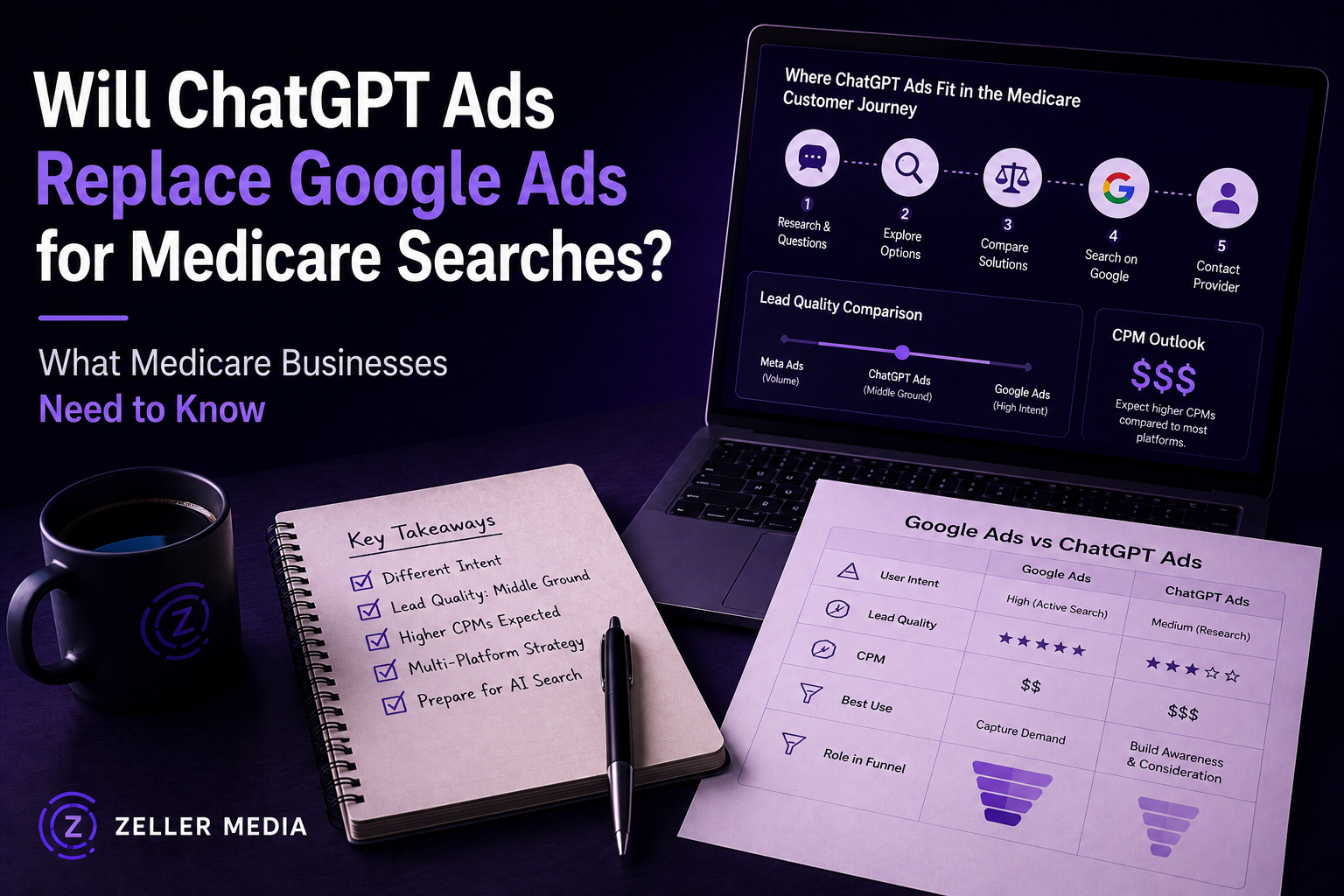
Where ChatGPT Ads May Fit Into the Medicare Customer Journey
ChatGPT appears better positioned for the research and consideration phase.
Before consumers search for a provider, many want answers to questions such as:
- What is the difference between Original Medicare and Medicare Advantage?
- Is Medicare Advantage worth it?
- What happens if I miss enrollment?
- Which Medicare plan is best for retirees?
These are the types of conversations that naturally fit an AI assistant.
Instead of opening multiple websites, users can ask questions and receive immediate explanations.
This creates a different advertising opportunity.
Rather than capturing people who are ready to speak with an agent today, ChatGPT Ads may allow businesses to reach consumers earlier in the decision making process.
For Medicare organizations, that could mean building awareness and trust before a prospect ever performs a traditional Google search.
Comparing Lead Quality Across Platforms
While the advertising ecosystem is still evolving, early reports suggest that lead quality may land somewhere between Meta and Google. Meta often excels at generating volume. Users are discovered while browsing content, even when they were not actively searching for a solution.
Google typically produces stronger intent because users are actively looking for answers or providers. ChatGPT may sit somewhere in the middle.
Users are intentionally researching a problem, but they are not always ready to take immediate action. That could create a unique opportunity for Medicare businesses that have strong follow up systems and educational sales processes.
The result may be fewer impulse leads than Meta and lower purchase intent than Google, but prospects who are actively evaluating their options.
Expect Higher CPMs Than Most Advertisers Are Used To
One factor Medicare businesses should prepare for is potentially higher advertising costs, unlike traditional social media platforms, ChatGPT operates within a premium, highly engaged environment.
Users often spend significant time interacting with the platform and asking detailed questions. Because of this, advertisers should not expect ChatGPT inventory to be inexpensive.
Higher CPMs may become the norm, The question will not be whether impressions cost more. The question will be whether those impressions produce higher quality conversations and stronger long term customer acquisition results.
For Medicare businesses, efficiency matters more than cheap traffic.
How Medicare Businesses Should Prepare Today
The best strategy is not choosing between Google and ChatGPT.
It is preparing for a future where consumers use both.
Businesses should focus on:
- Continuing to invest in Google Ads for high intent lead generation
- Creating educational content that answers common Medicare questions
- Building authority through SEO and thought leadership
- Improving website content that supports AI driven discovery
- Developing lead nurturing processes for prospects who are still evaluating options
As AI driven search behavior grows, businesses that educate prospects effectively will be positioned to benefit regardless of which platform generates the initial interaction.
Key Takeaways
- ChatGPT Ads are unlikely to replace Google Ads.
- Google will continue to dominate high intent Medicare searches.
- ChatGPT may become a powerful consideration stage platform.
- Lead quality may fall between Meta and Google.
- Higher CPMs should be expected.
- Medicare businesses should prepare for a multi platform customer journey.
Final Thoughts
The future of Medicare marketing is unlikely to be Google versus ChatGPT, instead, it will be Google and ChatGPT working together within a more complex customer journey.
Consumers are increasingly researching healthcare decisions through AI platforms before taking action. Businesses that recognize this shift early will be better positioned to build trust, improve visibility, and generate qualified leads as new advertising opportunities emerge.
The companies that win will not be the ones that abandon Google Ads.
They will be the ones that understand where AI fits into the decision making process and adapt accordingly.