If you've advertised on Meta recently, you already know: launching a campaign isn't upload creative, pick an audience, hit publish anymore.
We know because we do this every single day for our clients, and it's changed on us in real time.
Meta's ad platform is now running on AI and automatic optimizations that make decisions on your behalf, often without telling you they happened. Some of these features genuinely help performance. Others have cost our clients real money, real trust, and in one case, a wave of angry comments on a live ad.
Here's what that actually looks like from our side of the account.
Meta Changes Things. We've Watched It Happen.
We've launched a campaign, checked it before it went live, and had it look completely different by the time it hit an audience. Settings we didn't touch, turned on. Features we never selected, suddenly active.
One of the strangest ones: we had a client's account handle change, automatically, to a completely different client's handle, because the two accounts were connected on the back end. Nobody on our team did that. Meta did.
That's not a hypothetical risk we're warning you about. That happened on an account we manage.
The AI Image Feature Changed Our Client's Ad, And the Client Got Blamed First
This is the story that should make every advertiser stop and pay attention.
One of our clients had an AI image feature turned on by the platform. Meta's AI altered the photo in the ad, and changed the person in the image from a woman to a man. It left the hair clip in his hair.
The ad went live like that. It got comments. It got attention for the wrong reasons. And it got escalated straight to our client, who was, understandably, furious. It wasn't our error and it wasn't theirs, it was a platform feature making a creative decision nobody approved. But the client didn't see "Meta's AI" in that moment. They saw a broken ad with their brand on it.
That's the actual risk. Not underperformance. Reputational damage that happens before anyone on your team even sees it.
Even REI Got Caught by This
We're not the only ones. Outdoor retailer REI had an Instagram ad go out showing a bicycle with two sets of handlebars, an AI-altered image Meta had automatically applied through a personalization feature the brand hadn't intentionally turned on. REI pulled the feature once they caught it. You can read the original coverage here.
If a brand REI's size can get blindsided by this, assume it can happen to any account, including yours, which is exactly why we don't treat any launch as "set it and forget it."

Why Launching an Ad Now Takes Longer Than It Used To
Here's what our actual process looks like now, and it's not what it used to be three years ago:
• We check the campaign before it goes live.
• We check it again the moment it goes live.
• We check it again the next day.
Three separate checkpoints, every campaign, because Meta can and does change things at any of those stages. That's not us being overly cautious. That's us responding to what the platform actually does.
We're not managing campaigns anymore. We're playing defense against the platform while also trying to grow it. This kind of hands-on, no-autopilot management is exactly what our paid social team does for every account, every day.
Turning Features Off Shouldn't Be This Hard
Here's another one that doesn't get talked about enough: when we go in to disable automatic features, the ones that let Meta make creative or targeting decisions without our approval, the platform frequently freezes or throws errors mid-process.
It happens often enough that it doesn't feel like a coincidence. Whether that's intentional friction or not, the effect is the same: it takes longer to turn things off than it does to leave them on, and that's exactly backwards from what a business running real ad spend needs.
This Is Why "Set It and Run" Doesn't Work Anymore
A lot of business owners still think ad management means build it once, check it occasionally, let the algorithm do its thing. That mindset is what gets brands the REI headline, or our client's AI photo problem.
The businesses that avoid these situations are the ones with someone actually watching the account before launch, at launch, and the day after.
Not a dashboard. Not a "set it and forget it" automation stack. An actual operator who catches it before it becomes a screenshot.
Campaign Management Is Becoming Quality Assurance
Today's media buyers spend far more time reviewing campaigns than simply building them.
Before we launch anything for a client, we're verifying:
• AI generated creative enhancements
• Automatic image adjustments
• Headlines and primary text
• Destination URLs
• Tracking configuration
• Audience settings
• Creative previews
• Campaign objectives
• Placements
• Conversion tracking
This quality assurance process exists because we can no longer assume that any setting stays exactly as we configured it. That's not us being paranoid. That's the job now.
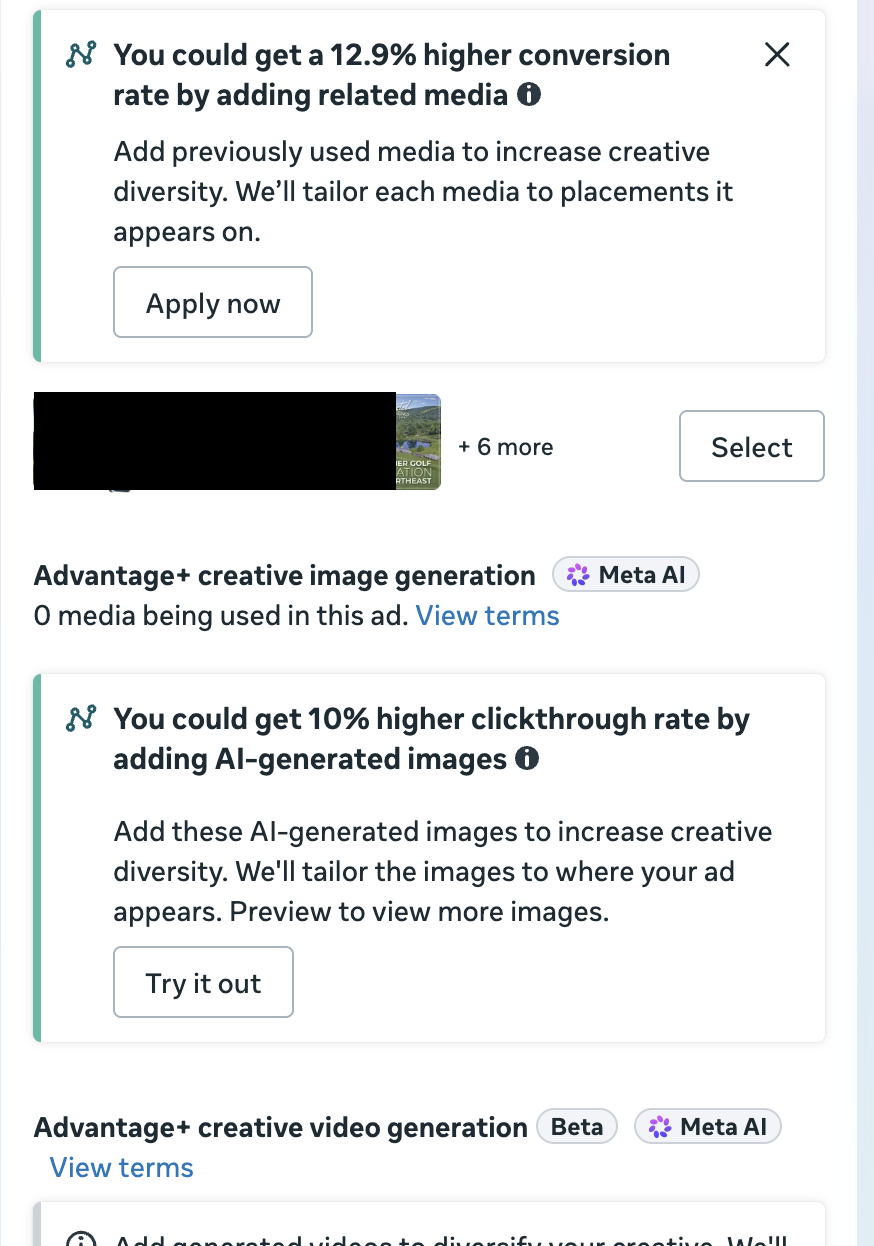
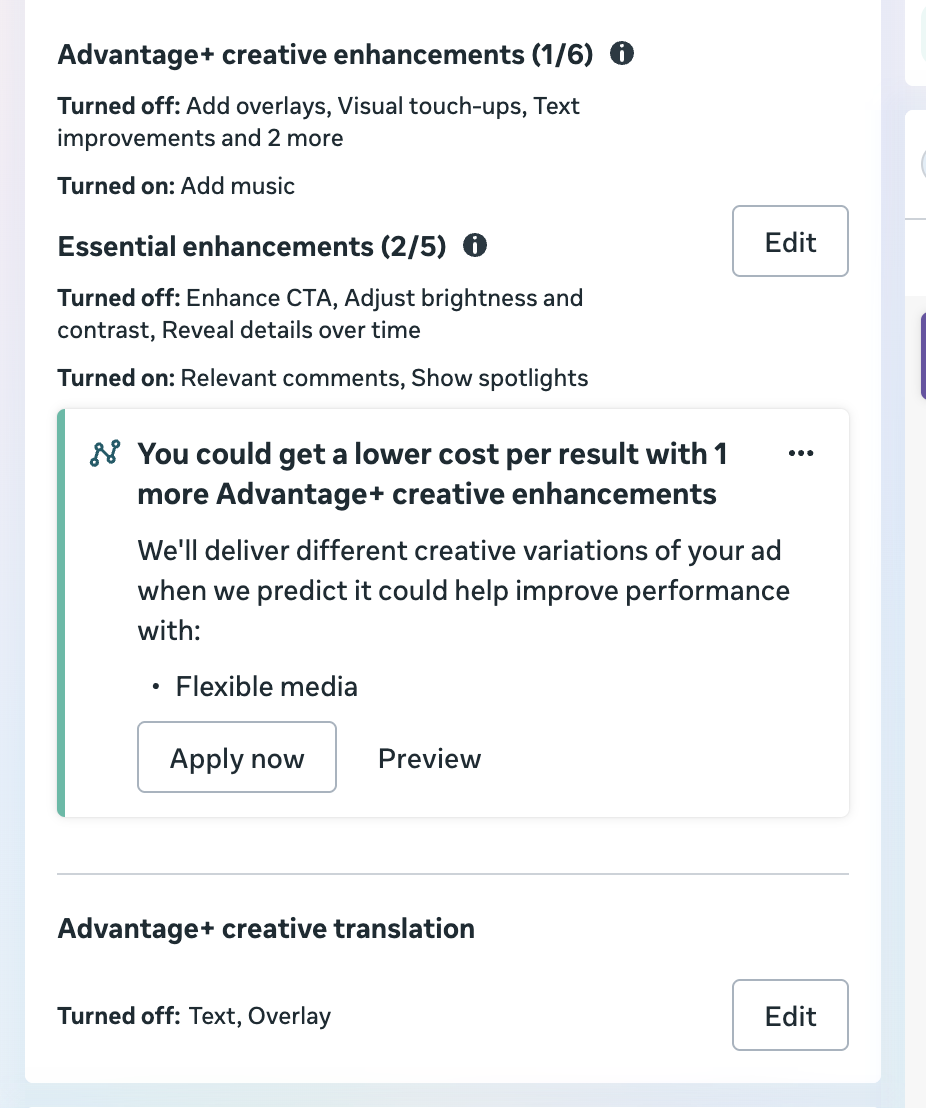
Every AI and Automatic Setting We Now Have to Check Before Launch
This is the part most advertisers never see, and it's why our process takes as long as it does. Every one of these is something Meta can turn on, adjust, or apply to a campaign without a person on our end clicking a button:
• Standard Enhancements (Meta's catch-all auto-improve toggle, bundles several of the items below and is on by default)
• Visual touch-ups (auto brightness, contrast, and color adjustments to images)
• Generative Expand / image expansion (AI fills in background to fit a placement)
• Image animation
• 3D animation
• Music addition to image/video ads
• Text improvements (AI rewrites your primary text or headline)
• Enhance CTA button
• Store locations addition
• Add overlays (auto text overlays on creative)
• Translate text automatically
• AI-generated ad copy variations
• AI-generated image variations
• Dynamic Creative (auto-mixes your images, videos, text, and CTAs into new combinations)
• Advantage+ Creative (the umbrella feature governing most of the above)
• Advantage+ Placements (automatic placement across Facebook, Instagram, Audience Network, Messenger)
• Advantage+ Audience / Detailed Targeting Expansion (expands your audience beyond what you set)
• Advantage+ Shopping Campaigns
• Advantage Campaign Budget (auto budget redistribution across ad sets)
• Multi-Advertiser Ads (your ad shown bundled with other advertisers' ads in the same unit)
• Automated App Ads
• Partnership Ads / branded content auto-tagging
Businesses Should Expect More Oversight, Not Less
Artificial intelligence will keep becoming part of digital advertising. That isn't likely to change.
What should change is the expectation that campaigns can simply be launched and forgotten.
As Meta keeps introducing AI powered campaign automation, businesses should expect experienced media buyers to spend more time reviewing campaigns, validating creative assets, and confirming that advertisements accurately represent the brand before they go live.
That extra attention isn't inefficiency. It's risk management.
Key Takeaways
• Meta is making changes to live campaigns on advertisers' behalf, and those changes aren't always visible until something's already wrong.
• We've had a client account handle swapped automatically between connected accounts, and an AI image feature alter a person's gender in a live ad, both without our teams touching a thing.
• Even major brands like REI have been caught off guard by the same kind of automatic AI changes.
• Disabling automatic features is intentionally slow and error-prone on the platform's end, which discourages advertisers from turning them off.
• The only reliable defense is a pre-launch check, a live check, and a next-day check, every time, no exceptions.
Final Thoughts
AI has a place in advertising. But right now, it's also the reason campaign management takes more hands-on time than it ever has.
We're not just building campaigns anymore. We're defending them, from the platform itself. That's the job now, and it's exactly why we don't hand our clients a "set it and forget it" promise. We check it before it launches, we check it the moment it's live, and we check it again the next day, because Meta has proven it will change things in between if we don't. It's the same hands-on approach behind our paid social management for every client we run.
That's not extra service. That's what it actually takes to protect a brand on this platform right now.