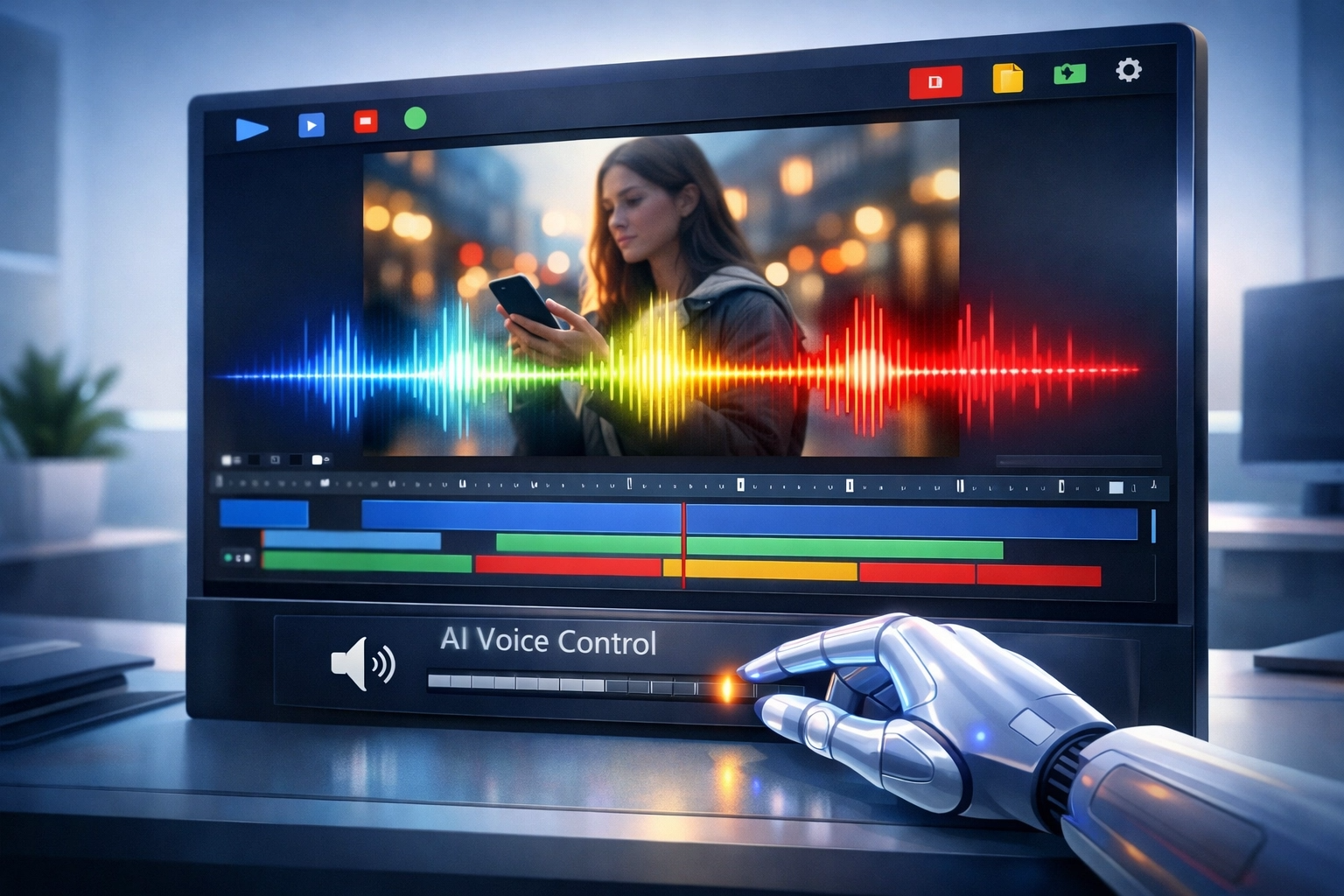
Google is rolling out AI-generated voice-overs for eligible Performance Max video ads, and unless advertisers opt out by March 20, those narrated versions can be created and served automatically. The feature applies only to videos without an existing voice track, uses advertiser-provided headlines and descriptions as the script source, and saves the result as a new video asset. Search Engine Land first reported the rollout, and Google’s Help documentation already shows the broader pattern: video enhancements are a default-on, opt-out feature family inside Google Ads.
That is exactly why this matters.
This is not really a story about voice-over. It’s a story about control. Google is once again taking advertiser inputs, turning them into new creative outputs with AI, and making those outputs eligible by default unless the advertiser proactively shuts the door. That may improve coverage and performance in some accounts, but it also means your ad can start sounding different to users without your creative team ever producing that version.
This Is Convenient. It Is Not Neutral.
Google’s pitch is straightforward: use AI voice models to improve the viewer experience and potentially drive better performance. The platform has already been expanding automated creative variations through video enhancements that flip, shorten, and reformat videos, and Google explicitly says those enhancement controls are opt-out in several campaign contexts. This new voice layer fits the same trajectory.
The problem is that “convenient” and “brand-safe” are not the same thing.
A voice-over is not just another asset crop. It changes tone, pacing, clarity, and brand feel. A weak narration can make a polished visual look cheap. A generic narration can flatten good creative. And if the script is being pulled from headlines and descriptions that were written for on-screen reading, not spoken delivery, the result may technically function while still sounding off. The system may create a new eligible asset, but eligibility is not the same thing as quality. The sources confirm how the mechanism works; the creative risk is the obvious implication.
The Bigger Pattern Is What Advertisers Should Notice
Google has spent the last two years normalizing AI-generated variation inside ad accounts. Its Help Center documents automatic video enhancements, default-on asset optimizations, suggested Google-optimized assets, and even manual voice-over creation tools inside Asset Library. In other words, the platform has been building toward this for a while. The voice-over update is not random. It is part of a broader push to turn advertiser inputs into more machine-generated outputs at scale.
That is where some advertisers keep making the same mistake. They evaluate each individual feature in isolation instead of looking at the direction of travel.
The direction is clear: less manual production, more platform-generated creative, more default-on automation, and more responsibility on advertisers to opt out when they want tighter control. That does not automatically make the features bad. It does mean advertisers need to stop pretending these are minor UI updates. They are workflow changes.
Why This Could Actually Help Some Advertisers
To be fair, this will probably help some accounts.
A lot of Performance Max advertisers are still running weak video coverage, especially in cases where the existing asset is silent, templated, or visually decent but incomplete from a storytelling standpoint. Google has previously said campaigns with at least one video asset can see meaningful performance upside, and the company’s broader video enhancement push has been framed around unlocking more inventory and improving engagement. If an advertiser has bare-minimum creative resources, an AI-added narration layer may be better than a silent asset that never explains the offer.
That said, “better than silent” is a very low bar.
The real question is not whether Google can generate a usable voice-over. It’s whether advertisers should let the platform make that call by default.
This Is An Agency Problem Too
For agencies, this is not just a creative issue. It is an operations issue.
The opt-out appears tied to video enhancement controls, and reporting indicates advertisers need to review campaign settings before March 20 if they do not want eligible narrated versions generated automatically. PPC Land notes this is a campaign-level workflow, not a simple one-click universal exclusion, which means larger accounts and multi-client portfolios need actual process around it.
That matters because these deadlines are exactly where sloppy account management gets exposed. If you are managing multiple PMax campaigns and you do not know which clients can tolerate AI-generated narration and which absolutely cannot, you are not really managing creative governance. You are hoping the platform makes tasteful decisions for you.
That is not a strategy.
What Advertisers Should Actually Do
First, audit every Performance Max campaign using video assets that do not already contain a voice track. According to the reporting around the rollout, those are the assets most directly in scope. Second, decide brand by brand whether AI narration is acceptable, testable, or completely off-limits. Third, review your video enhancement settings before the deadline rather than after the first awkward client email.
More broadly, advertisers should stop treating platform defaults as recommendations. Defaults are often growth levers for the platform, not guardrails for the brand. Google’s documentation already shows that creative optimizations are frequently enabled by default, with opt-out available only if the advertiser takes action. That means account control is increasingly an active job, not a passive assumption.
What Zeller Media Thinks
At Zeller Media, we are not anti-automation. We are anti-unquestioned automation.
If an AI-generated voice-over improves a low-production asset and drives better performance, great. Test it. But test it as a decision, not as a default you forgot to disable. Creative variation is useful when it happens inside a framework of brand control, not when it quietly appears because the platform decided more automation would probably help. The Google sources support the feature mechanics; our view is that advertisers still need a human standard for what should actually run.
Final Take
Google’s new PMax voice-over feature is not outrageous. It is just revealing.
It reveals how ad platforms increasingly think about creative: not as finished work supplied by advertisers, but as raw material for machine-led variation. That may create performance wins in some cases. It may also create brand friction, awkward narration, and approvals problems in others. The only thing that should not happen is sleepwalking into it.
If you trust Google to improvise your ad’s voice, leave it on.
If you care how your brand actually sounds, check the setting before March 20.